
Introduction
China is the world’s largest producer of industrial ultrasonic cleaning equipment, and for overseas buyers the value proposition is compelling: competitive pricing, a deep supply chain for transducers, generators, and stainless steel fabrication, and the ability to customize tank sizes and multi-stage lines that Western brands quote at several times the price. But the market is also crowded with traders, assemblers, and low-cost builders whose equipment varies enormously in build quality and performance.
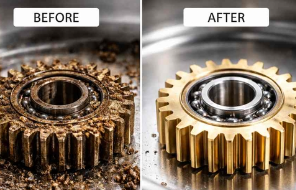
This guide gives overseas buyers a structured due diligence process for sourcing an ultrasonic cleaning machine from China, so you capture the genuine value without inheriting the common risks.
Why China Is the Right Place to Source
⚙ The Structural Advantages
- ✔ Cost efficiency: lower fabrication and assembly costs at equal specification
- ✔ Scale and flexibility: small single tanks to large multi-stage automated lines
- ✔ Customization: non-standard dimensions and automation are common
- ✔ Component supply: transducers and generators produced locally at competitive cost
Established manufacturers such as Tense, founded in Shanghai in 2005 and certified to ISO 9001, CE, and ROHS, have built long-term relationships with international brands including Bosch, Caterpillar, and Komatsu.
Where the Risk Comes From
Identical-looking machines can differ in steel thickness, transducer quality, and generator reliability. The risk is failing to distinguish genuine manufacturers from low-end assemblers and trading companies.
Ultrasonic cleaner TS series
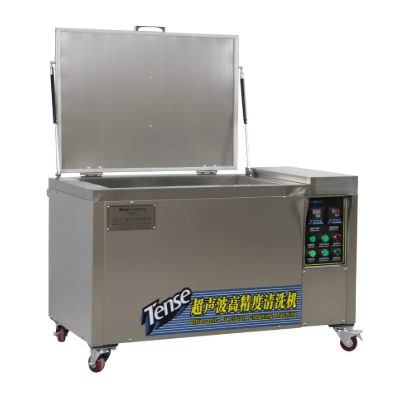
Short Description:
Step 1: Identify Who You Are Actually Buying From
Manufacturer vs. Trading Company
- Does the company own its factory and fabricate the tanks?
- How long has it been in operation under the same name?
- Does it design its own generators and transducers?
- Can it show factory video, production equipment, and assembly?
Verify the Factory
Request a video tour, check registration history, and ask for customer references in your region.
Match the Supplier
Confirm the supplier routinely builds equipment of your specific size and complexity.
Step 2: Inspect the Technical Specification
Tank Construction
Stainless steel grade (304/316L), steel thickness, and insulation quality.
Transducers & Generator
Bonding method, effective power density (watts/liter), and digital control features.
Heating & Control
Heater power, temperature accuracy, and electrical safety standards.
Step 3 & 4: Certifications & Performance
Documentation
Ensure genuine CE, ROHS, and ISO 9001 certifications. A serious supplier provides full manuals and wiring diagrams in English.
Validation (FAT)
Perform Cleaning Trials on your actual parts. Before shipment, require a Factory Acceptance Test (FAT) including the foil test and full-load cycles.
Step 5: Negotiate the Commercial Terms
Payment Structure: Avoid 100% upfront. Use a deposit and balance against inspection.
Warranty: Clarify coverage for generators and transducers and how international claims are handled.
Spare Parts: Include critical spares (transducers, seals, heaters) in the initial purchase.
Buyer’s Due Diligence Checklist
Conclusion
Sourcing from China is an excellent decision when done with care. Treat the purchase as a piece of industrial engineering to be validated, not a commodity.
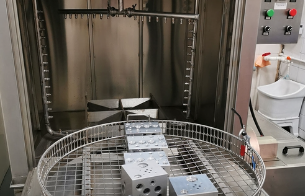
Begin the process by sharing your requirements with Tense.
FAQ
Q: Is it safe to buy industrial cleaning equipment from China?
A: Yes, when you buy from a genuine manufacturer. Verify the factory, specifications, and performance before shipment.
Q: How can I verify a supplier’s CE certification?
A: Request the Declaration of Conformity and check the notified body and directives covered.
Q: Should I run cleaning trials before ordering?
A: Absolutely. Sending dirty parts for a trial is the most reliable way to avoid under-powered equipment.
Post time: Nov-27-2026