
Can Ultrasonic Cleaning Fully Remove Trapped Powder from 3D Printed Metal Parts?
Meta: Metal 3D printed parts trap unfused powder in internal channels and lattice structures. Discover whether industrial ultrasonic cleaning effectively removes trapped powder, optimal parameters, and real-world performance data.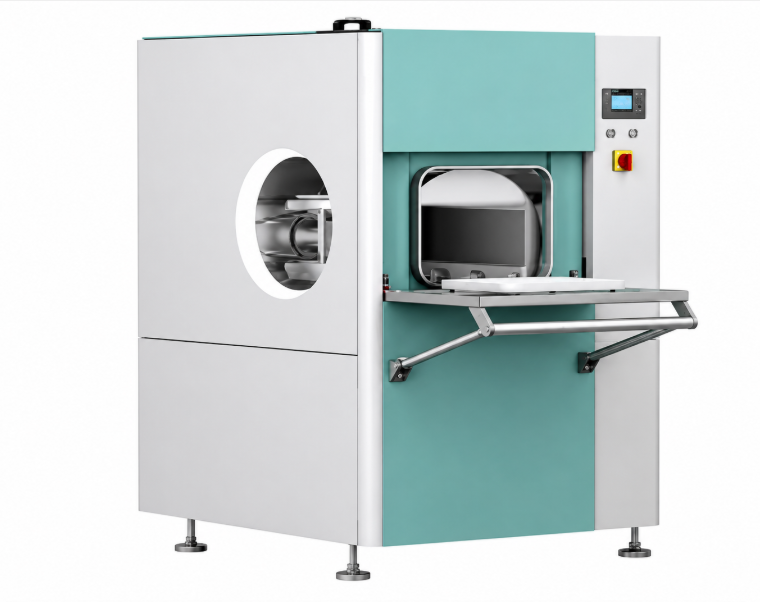
Metal additive manufacturing (AM) enables complex geometries impossible with traditional machining — but those same complex internal features create one of the industry’s biggest post-processing challenges: trapped powder removal. Unfused metal powder stuck in conformal cooling channels, lattice structures, and blind holes affects part quality, downstream processing, and functional performance. This article evaluates whether industrial ultrasonic cleaning delivers a reliable solution.
The Powder Removal Challenge in Metal AM
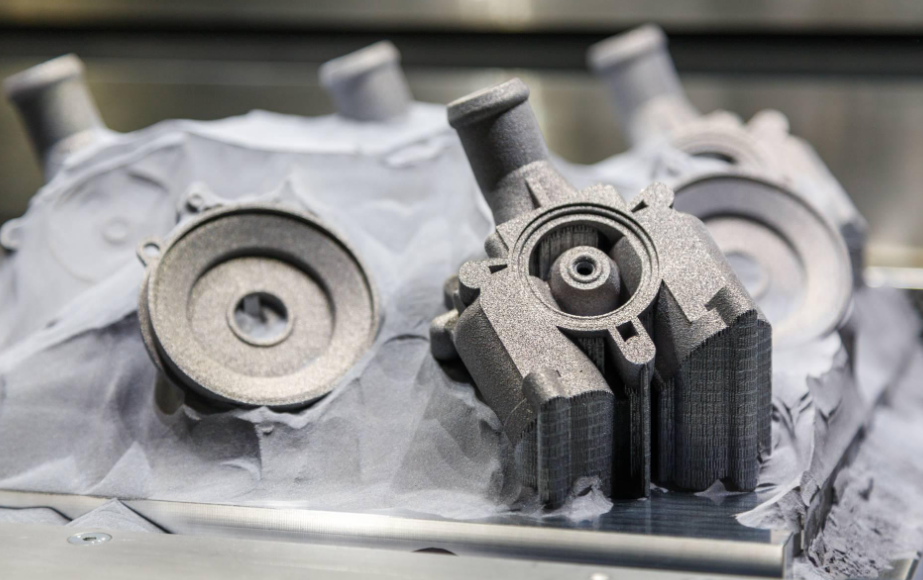
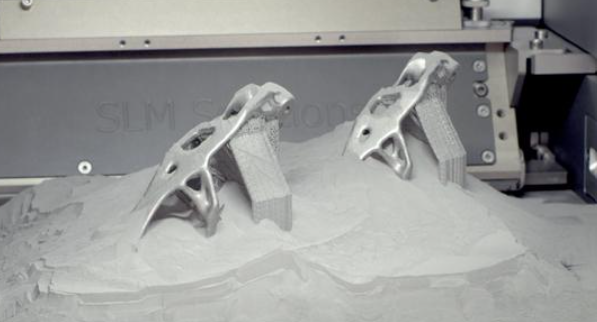
After printing and depowdering, metal AM components retain residual powder in hard-to-reach features. The problem is most severe for:
- • Conformal cooling channels with complex curvature and variable cross-section
- • Dense lattice and topology-optimized structures with thousands of internal surfaces
- • High-aspect-ratio blind holes and threaded internal features
- • Internal cavities with restricted openings
Incomplete powder removal causes: – Dimensional inaccuracy and poor surface finish – Powder sintering during heat treatment (fusing permanently to internal surfaces) – Blocked fluid pathways in functional end-use parts – Contamination of post-processing baths – Excessive manual labor and rework time
Compressed air, manual brushing, and tumbling all struggle with inaccessible internal geometry and risk damaging delicate features.
How Ultrasonic Cleaning Targets Trapped Powder
Ultrasonic systems generate high-frequency sound waves that propagate through a liquid bath, creating controlled cavitation — millions of microscopic bubbles that form and collapse in microseconds. The resulting micro-jets and hydraulic shock dislodge particulate from every exposed surface.
For metal 3D printed parts, the process works on four levels: 1. Loose surface powder — cleared within the first 1–3 minutes 2. Semi-adhered powder — lifted in 5–10 minutes with optimized frequency 3. Powder deep in internal channels — cavitation penetrates bores down to ~0.5 mm diameter 4. Sintered residue on rough surfaces — enhanced with mild alkaline detergent
The key advantage: if liquid can reach a surface, cavitation can clean it. This makes ultrasonic uniquely suited for the complex internal geometry of AM parts.
Performance Comparison
|
Method |
Internal Channel Reach |
Process Consistency |
Labor per Batch |
Part Damage Risk |
Typical Cycle Time |
|
Ultrasonic Cleaning |
Excellent |
High |
Minimal |
Very low |
5–15 min |
|
Compressed Air |
Poor |
Low |
Medium |
Medium |
10–30 min |
|
Manual Brushing |
None |
Very low |
High |
High |
30–60 min |
|
Chemical Etching |
Good |
Medium |
Medium |
High (over-etch) |
20–45 min |
Key Advantages for Metal AM:
- • Geometry-agnostic cleaning — cavitation reaches every internal surface, regardless of channel path
- • Batch throughput — dozens of parts processed simultaneously
- • Digital repeatability — PLC-controlled cycles ensure identical results run after run
- • Operator safety — closed-tank operation reduces airborne powder exposure
- • 20–28 kHz — heavy-duty removal for robust parts, larger channels, and firmly packed powder
- • 40 kHz — general-purpose; standard for Ti-6Al-4V and 316L components
- • 68–80 kHz — delicate lattices, thin walls, and fine-feature parts where low frequency risks damage
- • Mild alkaline aqueous detergent (pH 9–11) for most metal alloys
- • Operating temperature: 50–65°C for optimal surfactant activation
- • Deionized water final rinse for high-purity applications
- • Simple external geometries: 3–5 minutes
- • Parts with internal channels: 8–12 minutes
- • Dense lattice structures: 10–15 minutes (with part rotation recommended)
3D PRINTING PARTS CLEANING MACHINE Parameters
| Parameter | Specification | Parameter | Specification |
|---|---|---|---|
| Overall Dimensions | 1300 × 800 × 1800 mm | Spray Cleaning Pump Power | 1.1 KW |
| Basket Size | 300 × 300 × 400 mm | Spray Cleaning Pump Flow | 100 L/min |
| Gross Weight | 240 KG | Spray Cleaning Pump Pressure | 3 bar |
| Power Supply | 220V / 60HZ / 1Phase | Spray Cleaning Pump Qty. | 2 Sets |
| Rated Power | 6.0 KW | Ultrasonic Frequency | 40 KHZ |
| Rated Current | 27 A | Ultrasonic Power | 2.0 KW |
| Air Blower Power | 1.5 KW | Ultrasonic Qty. | 1 Set |
| Rotating Motor Power | 0.2 KW | Liquid Tank Volume | 220 L |
| Liquid Tank Qty. | 2 Sets |
Fixturing Note
Parts should be oriented so openings face downward or sideways, allowing liquid circulation and powder to settle out of channels. Oscillating fixtures measurably improve results for horizontal bores.
Real-World Effectiveness
Production data from metal AM service bureaus shows properly configured industrial ultrasonic systems achieve: – 95%+ powder removal from accessible internal channels – 85–90% removal from blind holes with aspect ratios up to 10:1 – 3–5× throughput improvement over manual depowdering
For applications requiring zero residual powder — medical implants, high-pressure fluid components, aerospace parts — ultrasonic cleaning is typically paired with a final air-knife blowout or low-pressure abrasive flow polishing step.
Limitations & Considerations
Ultrasonic powder removal has boundaries: – Extreme aspect ratios: Holes beyond ~15:1 aspect ratio show diminishing effectiveness at the bottom – Fully enclosed cavities: Powder cannot escape from completely sealed internal volumes (these require design for depowdering) – Sintered-on powder: Partially sintered material from the printing process may require longer cycles or pre-treatment – Dense lattices: Very fine lattices (<500μm struts) require careful frequency selection to avoid structural damage
System Specification for Metal AM Post-Processing
When specifying an industrial ultrasonic system for metal additive manufacturing, prioritize: – Dual or multi-frequency capability — versatility across part types from solid to delicate lattice – 316L stainless steel tank — for powder containment and corrosion resistance – Integrated powder filtration — captures removed powder, prevents recirculation, extends bath life – Automated lift mechanism — safe, ergonomic part handling – PLC with recipe storage — production repeatability across different part types – Optional rinsing and drying stages — for a complete inline workflow
Tense designs and builds 3D Printing parts cleaning machine optimized for metal AM post-processing, including integrated powder filtration and multi-stage configurations.
Conclusion
Yes — ultrasonic cleaning is the most effective single-step method for removing trapped powder from complex 3D printed metal parts. While extremely high-aspect-ratio features may still require a secondary finishing step, ultrasonic systems deliver unmatched consistency, speed, and geometric reach compared to manual or compressed-air methods.
For production-scale metal AM operations, a properly sized industrial ultrasonic system — ideally configured with powder filtration and a rinse station — directly reduces post-processing labor, improves part yield, and shortens overall lead times.
To discuss a custom configuration for your specific part geometry and throughput requirements, contact the application engineering team at Tense Industrial Cleaning.
Frequently Asked Questions
Q: Can ultrasonic cleaning remove powder from conformal cooling channels? A: Yes, very effectively. As long as liquid can circulate through the channel, ultrasonic cavitation cleans the full interior surface. Channels down to approximately 0.5mm diameter are effectively cleaned.
Q: Will ultrasonic cleaning damage delicate 3D printed lattice structures? A: Not when properly configured. Using higher frequencies (68–80 kHz) with moderate power settings safely cleans fine lattice structures without damage. The key is matching frequency and power to part robustness — never use heavy-duty 20 kHz settings on delicate lattices.
Q: What happens to the removed powder in the cleaning bath? A: Removed metal powder settles to the tank bottom and is captured by the filtration system. Industrial systems for metal AM use continuous recirculating filtration (typically 5–25 micron) to keep powder suspended in solution to a minimum. Filter cartridges are periodically replaced and the captured powder can be recovered or disposed of properly.
Q: Is ultrasonic powder cleaning compatible with all metal 3D printing materials? A: Yes, including titanium (Ti-6Al-4V), stainless steel (316L, 17-4 PH), aluminum (AlSi10Mg), Inconel, and cobalt-chrome. Detergent selection is adjusted based on material to avoid any potential surface reaction.
Post time: Aug-05-2026