
How to Clean Complex Engine Parts Without Damaging Precision Surfaces
Introduction
Engine components are among the most precision-engineered parts in any mechanical system. Cylinder heads, crankshafts, camshafts, valve bodies, and fuel injection components are manufactured to tolerances measured in microns. When these parts need cleaning—whether during manufacturing, remanufacturing, or maintenance—the cleaning process must remove every trace of contamination without altering the part’s critical dimensions or surface finish. Unfortunately, many traditional cleaning methods fall short of this standard, either failing to clean thoroughly or causing collateral damage to precision surfaces. In this article, we explore how an industrial ultrasonic cleaner achieves thorough cleaning of complex engine parts while protecting the precision surfaces that make those parts work.
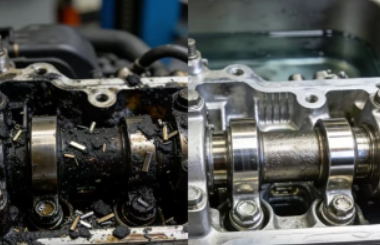
The Challenge of Cleaning Precision Engine Components
Why Traditional Methods Fall Short
Engine parts present a dual challenge: they are both geometrically complex and dimensionally precise. On one hand, they feature intricate internal passages, blind holes, threaded bores, and undercut features that are difficult to reach with spray nozzles or brushes. On the other hand, their sealing surfaces, bearing journals, and mating faces are machined to extremely tight tolerances where even microscopic damage can cause performance problems.
Traditional cleaning methods struggle with both aspects simultaneously:
!
Pressure washing can force contaminants into crevices and may erode soft metal surfaces over time
!
Bead blasting can alter surface roughness and leave media trapped in holes
!
Manual scrubbing is inconsistent and can cause abrasive damage to critical surfaces
!
Solvent soaking dissolves oils but may not remove solid contaminants effectively
The result is a trade-off that no manufacturer or rebuilder wants to make: clean the part thoroughly and risk damaging it, or clean gently and risk leaving contamination behind.
The Stakes of Surface Damage
The consequences of damaging a precision engine component during cleaning can be severe. A scratched cylinder head gasket surface can cause coolant leaks or compression loss. A damaged crankshaft journal can lead to premature bearing failure. A burr in a fuel injector bore can affect fuel atomization and engine performance.
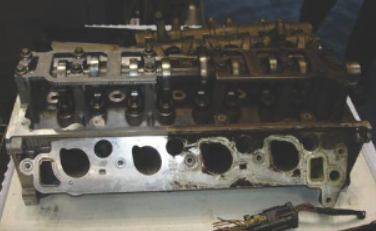
In manufacturing, damaged parts mean scrap and rework costs. In remanufacturing, they mean cores that cannot be salvaged and must be discarded. In both cases, the financial impact goes far beyond the cleaning process itself.
How Ultrasonic Cleaning Protects Precision Surfaces
Gentle, Non-Abrasive Cleaning Action
Unlike pressure washing, bead blasting, or manual scrubbing, ultrasonic cleaning machine technology uses a completely non-abrasive cleaning mechanism. The cleaning action comes from the implosion of microscopic cavitation bubbles in the cleaning solution. These bubbles are so small—measured in microns—that they do not cause mechanical damage to even the most delicate surfaces.
Think of it this way: a bristle brush applies concentrated mechanical force along a line of contact. A cavitation bubble applies diffuse energy across a microscopic area. The total cleaning power of billions of cavitation bubbles is enormous, but the force applied at any single point is gentle enough to preserve even highly polished surfaces.
FEATURED SOLUTION
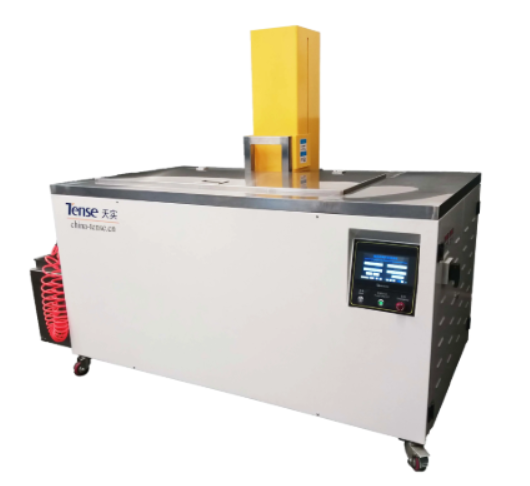
The industry standard range of ultrasonic cleaning equipment ranges from 140 to 2300 liters capacity. They are designed for cleaning and descaling of all types of parts, components and accessories.All equipment in this line can incorporate a lifting platform that facilitates loading and unloading of parts. They can also carry systems of filtration, separation of oils and water treatments, among others.
Uniform Energy Distribution
Another key advantage is that ultrasonic energy is distributed uniformly throughout the cleaning tank. Every surface exposed to the cleaning solution receives the same level of cleaning intensity, with no hot spots or dead zones. This means you do not have to worry about over-cleaning some areas while under-cleaning others.
For precision engine components, this uniform cleaning action ensures that all surfaces—whether flat, curved, internal, or external—are cleaned to the same standard without localized damage.
Optimizing Ultrasonic Cleaning for Different Engine Materials
Aluminum Components: Special Considerations
Aluminum is increasingly used in modern engines for cylinder heads, blocks, pistons, and various brackets. While aluminum offers excellent strength-to-weight ratio, it is also softer and more chemically reactive than steel or cast iron.
• Frequency selection: Higher frequencies (40 kHz and above) produce gentler cavitation
• Detergent choice: Neutral or mildly alkaline detergents are preferred to avoid etching
• Temperature control: 50–60°C is typically optimal
• Cycle time: Testing is recommended for critical components
• Detergent choice: Neutral or mildly alkaline detergents are preferred to avoid etching
• Temperature control: 50–60°C is typically optimal
• Cycle time: Testing is recommended for critical components
Steel and Cast Iron: Heavy-Duty Cleaning
Steel and cast iron components—crankshafts, connecting rods, valve bodies, and cylinder liners—are more durable and can withstand more aggressive cleaning parameters.
• Lower frequencies: (25–28 kHz) for heavy carbon and grease removal
• Stronger detergents: Faster degreasing with alkaline solutions
• Higher temperatures: (60–80°C) accelerate the process
• Cycle times: Longer cycles are generally safe
• Stronger detergents: Faster degreasing with alkaline solutions
• Higher temperatures: (60–80°C) accelerate the process
• Cycle times: Longer cycles are generally safe
Mixed Material Assemblies
When cleaning assemblies that contain multiple materials—such as a cylinder head with aluminum castings, steel valve guides, and brass seats—it is important to select cleaning parameters that are safe for the most sensitive material in the batch. This usually means erring on the side of gentler parameters and accepting slightly longer cycle times.
Best Practices for Precision Parts Cleaning
Proper Part Loading and Fixturing
- Use open-mesh baskets that allow free circulation of cleaning solution
- Position parts so that blind holes and cavities face downward
- Avoid stacking parts on top of each other to prevent shadow areas
- Use plastic or rubber-coated racks for highly polished surfaces
- Ensure parts are fully submerged below the solution level
- Position parts so that blind holes and cavities face downward
- Avoid stacking parts on top of each other to prevent shadow areas
- Use plastic or rubber-coated racks for highly polished surfaces
- Ensure parts are fully submerged below the solution level
Detergent Selection and Maintenance
The right cleaning detergent is essential for both effectiveness and surface protection. A well-maintained ultrasonic cleaning machine with the right detergent will consistently deliver clean, undamaged parts.
Post-Cleaning Rinse and Drying
The cleaning process does not end when the ultrasonic cycle finishes. Proper rinsing and drying are essential to remove detergent residue, prevent water spots, and inhibit flash rusting on ferrous components. For high-precision applications, a dedicated rinse tank with deionized water and a forced-air drying station will produce the best results.
Conclusion
Cleaning complex engine parts without damaging precision surfaces is a challenge that has plagued manufacturers and rebuilders for decades. Traditional cleaning methods force a compromise between cleaning thoroughness and surface protection—a compromise that costs money in scrap, rework, and quality issues.
Industrial ultrasonic cleaner technology eliminates this compromise by delivering thorough, uniform cleaning through microscopic cavitation action that reaches every surface while being gentle enough to preserve even the most precise dimensions.
To find the right ultrasonic cleaning solution for your engine components, visit [Tense's product page] to explore the TS Series of industrial ultrasonic cleaners designed for automotive and precision manufacturing applications.
FAQ
Q: Can ultrasonic cleaning damage aluminum engine parts?
A: When properly configured with the right frequency, detergent, and temperature, ultrasonic cleaning is safe for aluminum parts. The key is using higher frequencies (40 kHz+), pH-neutral detergents, and avoiding excessive temperatures or cycle times.
Q: Will ultrasonic cleaning affect the surface finish of machined parts?
A: No. The cavitation bubbles are microscopic and do not alter the surface profile of machined parts. In fact, ultrasonic cleaning can actually improve surface quality by removing embedded contaminants that would otherwise remain.
Q: How do I know which frequency to use?
A: As a general rule, 25–28 kHz for heavy-duty cleaning of durable parts, 40 kHz for general-purpose cleaning of most components, and 60–80 kHz for delicate parts or precision surfaces.
Q: Can I clean assembled engines or must they be disassembled?
A: For thorough cleaning, parts should be disassembled. Assemblies have internal surfaces that cannot be reached if the parts are still assembled, and trapped air pockets can prevent cleaning solution from reaching all areas.
Post time: Aug-13-2026