
Introduction
Automatic transmissions are among the most contamination-sensitive assemblies in any vehicle. Dozens of hydraulic passages, valves operating at tight tolerances, clutch packs, and precision gears all depend on clean fluid and clean surfaces to function. A single metal chip left in a valve body bore can cause a shift complaint, a solenoid failure, or a warranty comeback. For transmission rebuilders, remanufacturers, and service shops, cleaning is therefore not a routine chore—it is a core quality competency that determines whether a rebuilt transmission lasts. This article explains how ultrasonic cleaning handles the most difficult transmission components, including valve bodies, gears, and housings, and how to set up an ultrasonic cleaning machine process that delivers the cleanliness these parts demand.
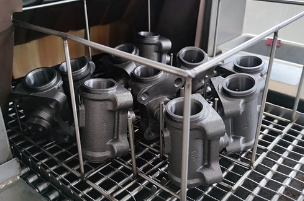
Why Transmission Parts Are Especially Hard to Clean
⚙️
Dense, Complex Internal Hydraulics
A modern valve body is a maze of cross-drilled bores, valve spools, accumulator bores, separator-plate channels, and solenoid ports. Some passages are only a few millimeters wide, and many intersect at angles that trap debris with no straight-through path. Housings contain fluid galleries, bolt holes
Transmission components carry a mixture of very different soils:
- • Dark, oxidized transmission fluid and varnish baked onto hot components
- • Clutch and friction material dust from worn plates and bands
- • Fine metal fines from gear, bearing, and bushing wear
- • Machining chips from new or remachined housings and valve bodies
- • Sealant and gasket residue on split surfaces
- • Sludge and sediment that settles in the bottom of housings and coolers
The Cost of Getting It Wrong
Residual contamination in a rebuilt transmission causes: Hard, delayed, or erratic shifts; Solenoid failures; Contamination of new plates; Repeated comebacks; and Warranty claims. A transmission component cannot be judged clean by appearance alone.
Why Ultrasonic Cleaning Outperforms Traditional Methods
Lift Ultrasonic Cleaner TS-UD Series
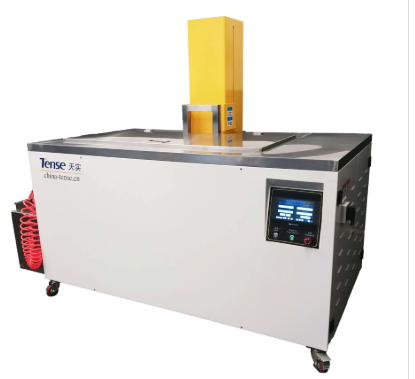
Short Description:
The industry standard range of ultrasonic cleaning equipment ranges from 140 to 2300 liters capacity. They are designed for cleaning and descaling of all types of parts, components and accessories. All equipment in this line can incorporate a lifting platform that facilitates loading and unloading of parts.
The Limitation of Solvent Tanks and Spray Washers
Hot tanking, solvent soaking, and cabinet spray washers address surface grease but struggle with transmission internals. Spray jets cannot penetrate the valve body’s labyrinth of bores, and solvent soaking does not mechanically lift metal fines from cross-holes.
How Cavitation Reaches Every Passage
An industrial ultrasonic cleaner creates cavitation—millions of microscopic bubbles that implode throughout the liquid. Benefits include:
Component-Specific Cleaning Guides
Cleaning a Valve Body
Disassembly Is Essential: The valve body should be fully stripped: valves, springs, pins, and plates removed. Solenoids usually follow separate procedures.
Recommended Process:
- Frequency: 40 kHz for precision protection.
- Temperature: 55–70°C to soften varnish.
- Detergent: Mildly alkaline, non-etching (aluminum safe).
- Cycle: 10–20 minutes with agitation.
Gears, Shafts & Plates
Use 28–40 kHz for hardened steel. Include rust inhibitor in final rinse. Avoid cleaning friction material in the same bath to prevent fiber contamination.
Housings and Cases
Large-tank cleaning (TS-UD series) is ideal. Pre-scrape gasket material. Use filtration and oil skimming to handle heavy sludge loads.
The Full Cleaning Workflow
Conclusion
Transmission rebuilding is a cleanliness business. Ultrasonic cavitation cleans every flooded surface simultaneously, ensuring high-quality results. Get the process right in a properly sized ultrasonic cleaning machine, and your rebuilt transmissions will leave the bench genuinely clean.
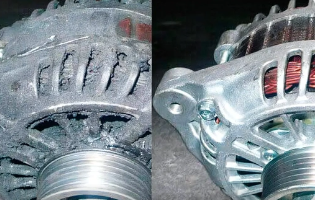
For help configuring an ultrasonic system, contact Tense with your component dimensions.
FAQ
Q: Can I clean a transmission valve body without fully disassembling it?
A: Not reliably. Stuck valves and sealed plates prevent solution from reaching every bore. Fully strip the valve body before cleaning.
Q: What frequency should I use for aluminum valve bodies?
A: 40 kHz is the typical starting point with an aluminum-safe detergent to avoid etching precision bores.
Q: Are transmission solenoids safe in an ultrasonic cleaner?
A: Generally not in heated aqueous production baths. Many rebuilders replace them or follow specific manufacturer procedures.
Q: Can I clean the whole transmission case in one cycle?
A: Yes, if the tank is large enough. A lifting machine helps significantly with large cases to ensure all galleries fill and drain.
Post time: Nov-13-2026