
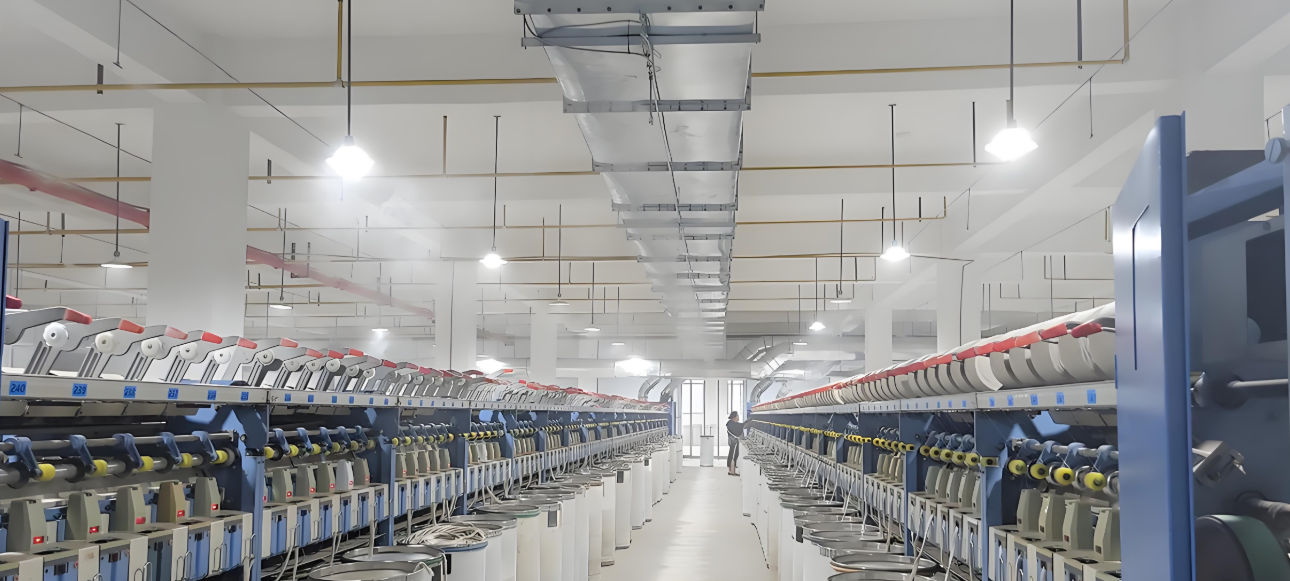
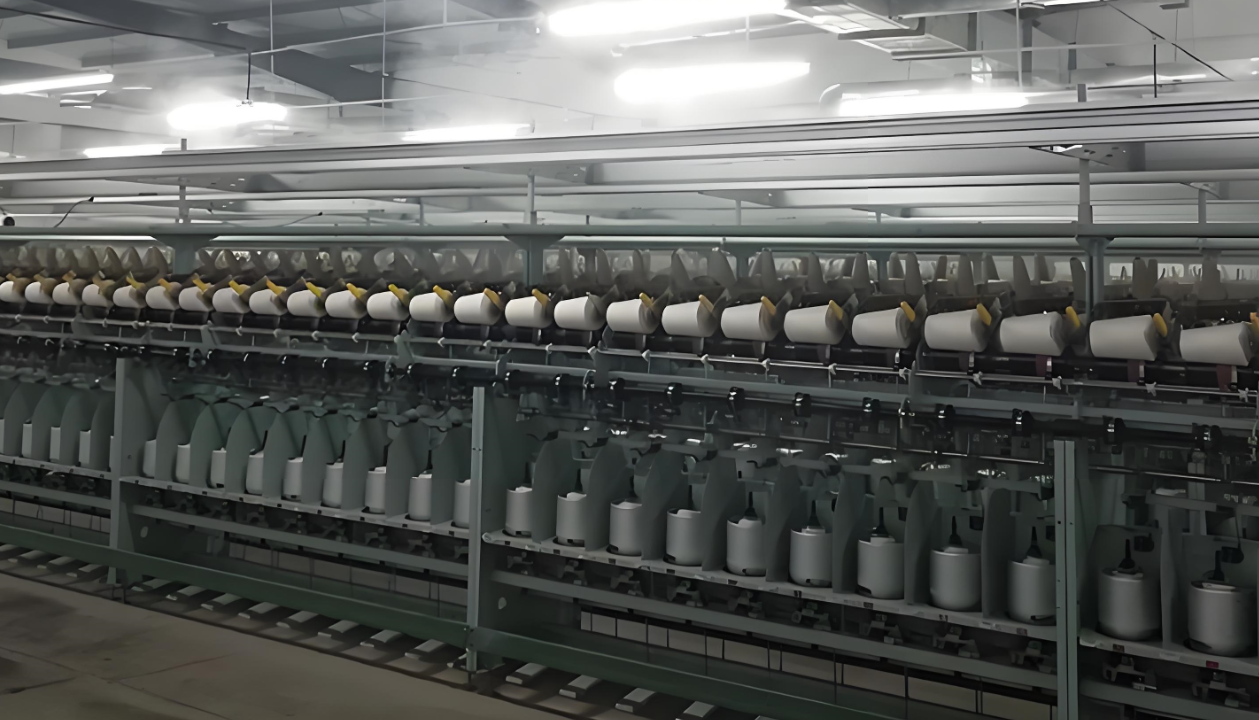
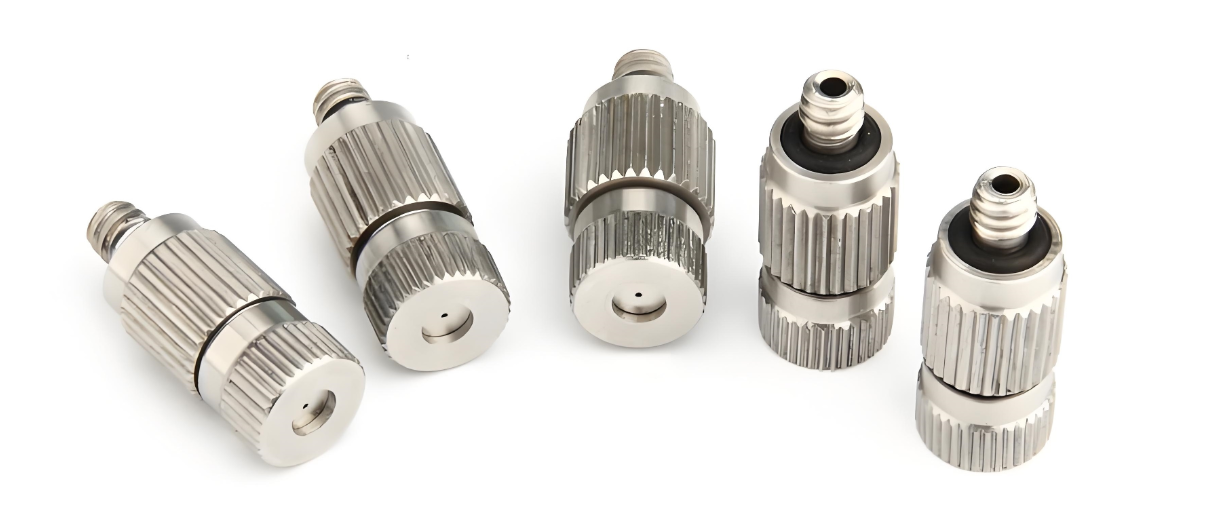
The air in the textile factory contains a large amount of fiber particles. After using the humidifier for a long time, the nozzle of the humidifier is prone to being clogged by the particles, which will affect the normal operation of the humidifier. At this point, regular cleaning is required.
The conventional cleaning of the nozzles is done by soaking them in hot water or cleaning agents and then manually unclogging them. This method has low efficiency and the cleaning effect on the nozzles is not satisfactory. However, through ultrasonic cleaning, it is possible to quickly remove dirt from the tiny holes and efficiently unclog nozzles of different sizes, with high efficiency.
The core competitiveness of the ultrasonic cleaning machine stems from its “cavitation effect” technology principle. When high-frequency sound waves ranging from 20 to 400 kHz propagate in the cleaning solution, numerous micrometer-sized true air bubbles are rapidly formed. These bubbles burst in the compression phase, releasing an instantaneous pressure of up to 1000 atmospheres and a local temperature of 5000K. The resulting microjets and shock waves can precisely remove contaminants such as oil, oxide layers, and metal debris from the surface of the workpiece. This physical cleaning method does not require strong wiping and can penetrate into the tiny crevices that traditional tools cannot reach. It can also avoid scratches or deformations on the workpiece surface, making it particularly suitable for cleaning precision components.
Compared to traditional cleaning methods, the advantages of ultrasonic cleaning machines are truly all-encompassing. In terms of efficiency, it can process multiple workpieces simultaneously in batches, reducing the cleaning time by over 60% compared to manual methods. It can also achieve intelligent control of time, temperature, and power, significantly reducing the cost of manual intervention. In terms of environmental protection, the cleaning solution can be recycled, reducing water consumption by 62% compared to traditional processes. The unit energy consumption is reduced by 55%-62%, which is in line with the “carbon neutrality” goal and can help enterprises meet increasingly strict environmental law enforcement requirements. Moreover, it has extremely strong adaptability. By adjusting the frequency parameters, it can meet the needs of different scenarios – 20-30 kHz is suitable for oil removal of large metal parts, 40-60 kHz is suitable for cleaning electronic components, and above 80 kHz can be used for cleaning precision products such as optical lenses and semiconductor wafers.
With the increasing policy support for green manufacturing, many regions offer financial subsidies for environmentally friendly cleaning equipment. The demand for ultrasonic cleaning machines continues to rise. For manufacturing enterprises that aim to reduce costs, increase efficiency, and comply with regulations, choosing an ultrasonic cleaning machine that suits their specific scenarios not only solves cleaning problems but also secures the market advantage in technological upgrades. Whether it’s a desktop device for small-batch precision cleaning or an industrial cleaning line for large-scale production, ultrasonic cleaning machines are driving the transformation in industrial cleaning through technological innovation, becoming indispensable core equipment in modern factories.
Shanghai Tense is dedicated to technological cleaning. Its products are applied in various industries. For the various low-pressure atomizing nozzles, air atomizing nozzles and fine atomizing nozzles used in the spinning process, weaving process and dyeing process of textile factories for cleaning, it can efficiently and with high quality achieve the functions of humidifying the workshop, reducing dust, lowering temperature and preventing static electricity
Post time: Dec-01-2025