
Buying an industrial ultrasonic cleaner is a significant investment, and with so many options on the market, it can be hard to know which one is right for you. Price tags range from a few hundred dollars for small benchtop units to tens of thousands for large industrial systems, and the specifications can be confusing. How do you know if you are getting a quality machine or just an expensive paperweight? The key is to ask the right questions before you buy. In this article, we cover the seven most important questions to ask when evaluating industrial ultrasonic cleaners, so you can make an informed decision and avoid costly mistakes.

Question 1: What Is the Actual Ultrasonic Power?
Why It Matters
Ultrasonic power—measured in watts—is one of the most important specifications, and also one of the most commonly misrepresented. Some manufacturers advertise “peak power” or “total power” numbers that sound impressive but do not reflect the actual ultrasonic energy delivered to the cleaning solution.
What you really care about is the actual ultrasonic power that is transmitted into the cleaning solution. This depends on:
- The number and size of the transducers
- The quality of the generator
- How efficiently the transducers are bonded to the tank
- The frequency of operation
What to Ask
- What is the actual ultrasonic power output, not just the input power?
- How many transducers are there, and what is the wattage per transducer?
- What is the power density (watts per gallon or per liter)?
- Is the power adjustable?
Question 2: What Frequency Does It Operate At?
Why It Matters
Frequency determines the size and intensity of the cavitation bubbles, which directly affects cleaning performance. Different frequencies are suitable for different applications:
- Low frequency (20–28 kHz): Aggressive cleaning for heavy soils on durable parts
- Mid frequency (40 kHz): General-purpose cleaning, the most versatile option
- High frequency (60–80 kHz+): Gentle cleaning for delicate parts and precision applications
Question 3: What Is the Tank Made Of?
The tank is the heart of the ultrasonic cleaner. 316 stainless steel is more corrosion-resistant than 304 and is preferred for applications where aggressive detergents or acids are used. For industrial units, look for tank walls that are at least 1.5–2 mm thick.
Question 4: What Are the Heating Capabilities?
Heating is essential for effective ultrasonic cleaning. For most industrial applications, you want a heater that can maintain temperatures between 50°C and 80°C with good accuracy (±2°C or better). Digital thermostats are much more precise and reliable than analog ones.
Question 5: What Kind of Controls and Features Does It Have?
The control system determines how easy the machine is to use and how consistent the results will be. Advanced features like Degas (to remove dissolved gases) and Sweep frequency (to eliminate dead zones) significantly improve cleaning results.
Question 6: What Kind of Support and Warranty Does the Seller Offer?
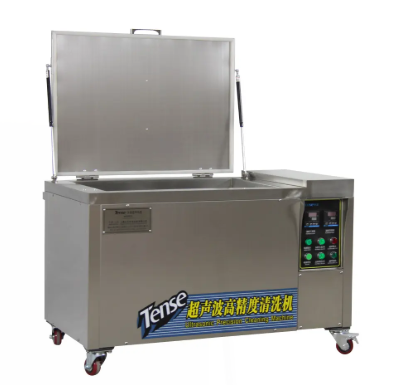
Ultrasonic cleaner TS series
Short Description:
TS series has been specifically designed for the cleaning and degreasing of all type of parts and components in Automotive industry. It achieves excellent cleaning results in many types of materials, especially in complex parts, where the ultrasounds have excellent results thanks to its high penetration capacity. Thus, the results while cleaning automobile engines are spectacular, even in those smaller and delicate parts.
Our Automotive series uses 28 kHz frequency with which the best results for the Automotive Sector are achieved.
Question 7: Can I See a Demo or Get a Test Cleaning?
Specifications and marketing materials can only tell you so much. A test cleaning is the gold standard. You send the supplier some of your actual parts, they clean them in their machine, and you evaluate the results.
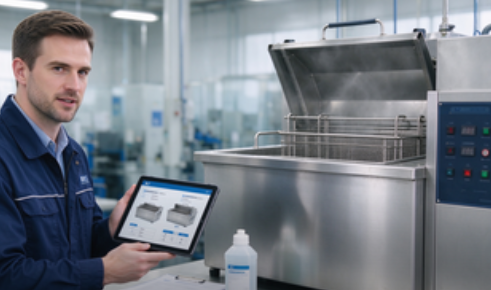
Buying from a reputable supplier like Tense that stands behind their products and provides good support can save you a lot of headaches down the road.
Bonus: What About Total Cost of Ownership?
When comparing different machines, do not just look at the purchase price. Consider the total cost of ownership over the life of the machine including energy, detergent, maintenance, and repair costs.
Conclusion
Buying an industrial ultrasonic cleaner is a significant decision. By asking the right questions—about power, frequency, construction, heating, controls, support, and testing—you can cut through the marketing hype and make an informed decision.
FAQ
Q: What is the most important factor when choosing an ultrasonic cleaner?
A: The most important factor depends on your specific application, but generally, the quality and power of the ultrasonic system (transducers and generator) is the most critical factor.
Q: Is a more expensive ultrasonic cleaner always better?
A: Not necessarily. Price is an indicator of quality, but it is not the only factor. The key is to find the right balance of quality, features, and price for your specific needs.
Q: How long should an industrial ultrasonic cleaner last?
A: A well-built industrial ultrasonic cleaner with proper maintenance can last 10–20 years or more.
Post time: Sep-24-2026