
Carbon deposits are one of the oldest and most persistent problems in engine maintenance and remanufacturing. Whether you are rebuilding an engine for a classic car, servicing a fleet of diesel trucks, or manufacturing pistons for high-performance applications, carbon buildup on piston crowns, ring grooves, and pin bores can be incredibly difficult to remove. Traditional methods—from wire brushing to chemical soaking to bead blasting—are either labor-intensive, ineffective, or potentially damaging to the piston itself. In this article, we examine why carbon deposits are so stubborn, why conventional methods fall short, and how an industrial ultrasonic cleaner provides a faster, more thorough, and safer solution.
Carbon deposits form when fuel and oil undergo incomplete combustion at high temperatures. Over time, this carbonaceous material builds up on the hottest surfaces inside the engine—particularly the piston crown, the top ring groove, and the combustion chamber. What makes these deposits so challenging to remove is their composition and structure.
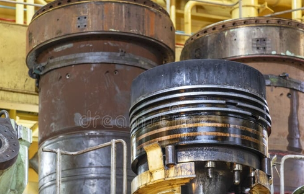
Carbon deposits are not simply soot sitting on the surface. They form a hard, vitreous layer that is chemically bonded to the metal substrate. The deposit itself is a complex mixture of:
This combination creates a deposit that resists both mechanical removal and chemical dissolution. It is hard, tenacious, and often deeply embedded in the surface pores of the metal.
Workshops and factories have tried countless methods to remove carbon deposits, each with its own drawbacks:
None of these methods offer the ideal combination of thorough cleaning, surface safety, speed, and cost-effectiveness.
An ultrasonic cleaning machine tackles carbon deposits through a synergistic combination of three factors: cavitation, heat, and detergent chemistry. Alone, each factor has limited effectiveness on stubborn carbon. Together, they create a cleaning system that penetrates and breaks down even the hardest deposits.
provides the mechanical energy. The implosion of microscopic bubbles creates micro-jets of liquid that bombard the deposit surface from every direction, working their way into cracks and pores that no brush or spray can reach.
softens the carbon matrix and accelerates chemical reactions. Most ultrasonic cleaning tanks include heating elements that maintain the solution at the optimal temperature—typically 60–80°C for heavy carbon removal.
breaks the chemical bonds between the carbon deposit and the metal surface. Alkaline detergents with surfactants and sequestering agents penetrate the deposit structure and help lift it away.
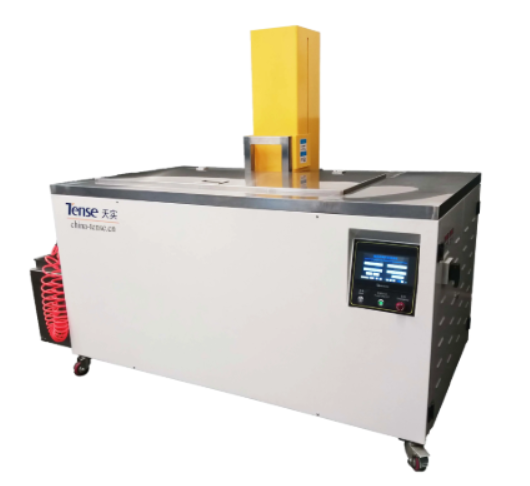
Lift Ultrasonic Cleaner TS-UD Series
The industry standard range of ultrasonic cleaning equipment ranges from 140 to 2300 liters capacity. They are designed for cleaning and descaling of all types of parts, components and accessories.
All equipment in this line can incorporate a lifting platform that facilitates loading and unloading of parts. They can also carry systems of filtration, separation of oils and water treatments, among others.
The key advantage of ultrasonic cleaning for carbon removal is its ability to reach every surface of the piston simultaneously. While a wire brush only cleans where it touches, and a spray nozzle only cleans where it points, ultrasonic cavitation cleans everywhere the solution touches.
For pistons, this means:
Every surface gets the same level of cleaning attention, with no missed spots and no rework required.
Aluminum pistons are the most common type in modern engines, and they require special care during cleaning. Aluminum is relatively soft, and aggressive cleaning methods can easily damage the surface. Additionally, many aluminum pistons have coatings—such as moly-coated skirts or anodized crowns—that must be preserved.
An industrial ultrasonic cleaner is ideal for aluminum pistons because:
With the right setup, aluminum pistons come out of an ultrasonic tank looking like new—clean down to the bare metal in the ring grooves while preserving the original surface finish on the skirt and crown.
Steel and cast iron pistons, found in heavy-duty diesel engines and some industrial applications, are more durable and can handle more aggressive cleaning. For these pistons:
For diesel pistons with heavy carbon packing in the ring grooves, ultrasonic cleaning can often achieve in 20–30 minutes what would take hours of manual scraping.
While ultrasonic cleaning is highly effective, a few simple preparation steps can improve results and reduce cycle time:
How you position pistons in the ultrasonic tank affects cleaning effectiveness:
Carbon deposits on pistons are a fact of life for anyone working with engines. But the traditional methods of removing them—manual scraping, chemical soaking, bead blasting—are slow, inconsistent, and potentially damaging.
Industrial ultrasonic cleaner technology offers a fundamentally better approach. By combining cavitation energy, heat, and specialized detergents, ultrasonic cleaning penetrates every crevice of the piston—ring grooves, pin bores, crown edges—and removes carbon deposits completely, without damaging the piston surface. For engine rebuilders, piston manufacturers, and fleet maintenance operations, this means faster cleaning, better results, and lower labor costs.
If you are still fighting carbon deposits the old-fashioned way, it may be time to see what ultrasonic cleaning can do for your operation. Learn more about piston cleaning solutions at [Tense], where you can find a range of industrial ultrasonic cleaners designed for automotive and engine applications.
A: Typical cycle times range from 15 to 45 minutes, depending on the thickness and age of the carbon deposits. Light to moderate carbon usually cleans in 15–20 minutes, while heavy, hardened carbon may take 30–45 minutes.
A: When properly configured with the right frequency and detergent, ultrasonic cleaning will not damage most piston skirt coatings. It is always recommended to test on a sample piston first.
A: For best results, rings should be removed before ultrasonic cleaning. This allows the solution to fully penetrate the ring grooves and ensures complete carbon removal.
A: Yes, when used with appropriate parameters. Higher frequencies (40 kHz), pH-neutral or mildly alkaline detergents, and moderate temperatures (50–60°C) are recommended for aluminum.
Post time: Aug-17-2026