
Introduction
In flexographic and packaging printing, the anilox roller is the heart of the inking system. Its precisely engraved cells carry a controlled volume of ink to the plate, and the volume of those cells directly determines print density, color consistency, and quality. Over time, dried ink, pigments, binders, and coatings build up in the tiny cells, plugging them and steadily reducing the volume of ink they deliver. Colors wash out, density becomes inconsistent, and printers chase press settings that cannot compensate for a dirty roller. Ultrasonic cleaning is one of the most effective, established methods for restoring anilox rollers and cleaning press components. This article explains how an ultrasonic cleaning machine is applied to anilox rollers and other printing equipment, what parameters protect the rollers, and how to build a consistent cleaning program.
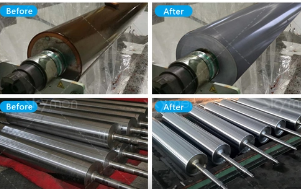
! How Anilox Rollers Become Plugged
The Engraved Cell Structure
Anilox rollers are engraved with millions of tiny cells per unit area, specified by screen count (lines per inch or centimeters) and cell volume. Two main types dominate the industry:
- Ceramic-coated rollers: Laser-engraved, with a hard chromium oxide surface that is durable but has a porous, textured surface.
- Chrome-plated rollers: Mechanically engraved, common in older and some specialty applications.
What Builds Up in the Cells
During printing and drying, the following materials accumulate:
The Cost of Plugged Anilox Rollers
- Inconsistent color and density
- Waste from rejected prints
- Slower press speeds
- Premature roller replacement
Common Cleaning Methods and Their Limits
Printers use several routine methods, each with limitations:
| Method | Limitation |
|---|---|
| Stainless Steel Brushes | Only reaches surface; can wear ceramic or damage cell walls. |
| Chemical Soaking | Slow on hardened UV ink and deep cell bases. |
| Soda/Plastic Blasting | Risk of cell damage and media embedding. |
Ultrasonic cleaner TS series
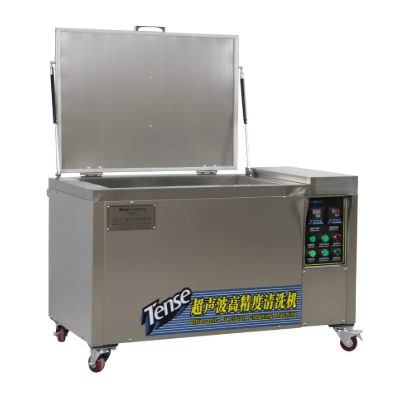
Short Description:
TS series has been specifically designed for the cleaning and degreasing of all type of parts and components in Automotive industry. It achieves excellent cleaning results in many types of materials, especially in complex parts, where the ultrasounds have excellent results thanks to its high penetration capacity. Thus, the results while cleaning automobile engines are spectacular, even in those smaller and delicate parts. Our Automotive series uses 28 kHz frequency with which the best results for the Automotive Sector are achieved.
✓ Why Ultrasonic Cleaning Works for Anilox Rollers
Cavitation Reaches the Bottom of Each Cell
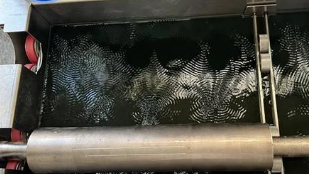
The limitation of brushing is that bristles cannot reach the bottom of the tiny engraved cells. Cavitation has no such limitation. As the roller is immersed in cleaning solution, microscopic bubbles form and implode throughout the liquid, including inside every cell. The micro-jets produced by cavitation break the dried ink and pigment out of the cell walls and bases, restoring the original engraved volume without mechanical contact or abrasive media.
Safe for Both Ceramic and Chrome
Applied correctly, ultrasonic cleaning is safe. Risk factors to avoid include:
- Excessive frequency/power
- Strongly alkaline chemistry
- Excessive temperature
- Poor roller support
Cleaning Other Press Components
Beyond anilox rollers, the machine can clean:
The Anilox Cleaning Process
Building a Cleaning Program
Effective maintenance is a schedule: Daily (surface), Weekly (preventative), and Periodic (ultrasonic deep clean). Track cell volume data to drive your cleaning frequency.
Choosing Equipment
Specify features like: Controlled frequency, gentle rotation, filtration systems, and stainless steel construction. Tense offers ISO 9001, CE, and ROHS-certified equipment tailored to your plant’s dimensions.
Conclusion
Anilox rollers are precision metering devices. Ultrasonic cavitation reaches the bottom of every cell without mechanical contact, restoring consistency on both ceramic and chrome rollers. Protect your rollers, and the press runs closer to specification on every job.
For an anilox roller or press-parts cleaning system, contact Tense.
Frequently Asked Questions
Q: Does ultrasonic cleaning damage ceramic or chrome anilox rollers?
A: It is safe for both when performed in a dedicated anilox machine with controlled frequency, power, temperature, and roller-specific chemistry. Damage risk comes from incorrect parameters, not the process itself.
Q: How often should anilox rollers be ultrasonically cleaned?
A: It depends on ink type and volume readings. UV ink and dark pigment jobs generally require more frequent cleaning. Schedule it on a planned basis before density becomes unacceptable.
Q: Can ultrasonics remove cured UV ink from anilox cells?
A: Yes. Ultrasonic cleaning with dedicated UV-ink chemistry and controlled heat is one of the few effective methods for clearing polymerized UV deposits.
Post time: Nov-24-2026