
When people think about ultrasonic cleaning, they usually focus on the machine—the tank, the transducers, the generator. But the cleaning solution is just as important. The right detergent can make the difference between a part that comes out spotless and one that still has residue. The wrong detergent can damage parts, reduce cleaning effectiveness, or even harm the equipment itself. In this comprehensive guide, we compare water-based and solvent-based ultrasonic cleaning detergents, explain the pros and cons of each, and help you choose the right cleaning solution for your industrial ultrasonic cleaner and your specific application.
The Role of Detergent in Ultrasonic Cleaning
Why You Can’t Just Use Plain Water
You might be wondering: if cavitation does all the cleaning, why do you need detergent at all? Can you not just use plain water?
The truth is that while cavitation provides the mechanical energy, the detergent provides the chemical action that breaks the bond between the soil and the part surface. Plain water alone has very limited cleaning ability. Here is why:
- Surface tension: Water has high surface tension, which makes it harder for cavitation bubbles to form and reduces cleaning effectiveness
- Soil removal: Water alone cannot dissolve oils, greases, or other organic soils
- Wetting: Water does not wet surfaces well, especially oily or greasy surfaces
- Redeposition: Without detergents, removed soil can easily redeposit on parts
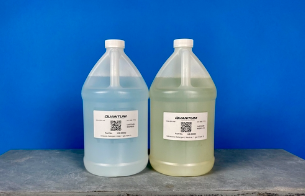
Detergents solve all of these problems. They lower surface tension to improve cavitation, break down and dissolve soils, improve wetting, and prevent redeposition.
The Synergy Between Cavitation and Chemistry
The most powerful aspect of ultrasonic cleaning is the synergy between mechanical cavitation and chemical detergent action. Each enhances the other:
- Cavitation accelerates chemical reactions by creating extreme local conditions at the bubble interface
- Detergents lower surface tension, making it easier for cavitation bubbles to form
- Cavitation helps detergent penetrate into crevices and pores that the chemical alone could not reach
- Detergents break the chemical bonds holding soil to the surface, making it easier for cavitation to lift it away
This 1+1=3 effect is why an ultrasonic cleaning machine with the right detergent can achieve results that neither mechanical nor chemical cleaning alone can match.
Water-Based Detergents
What Are Water-Based Detergents?
Water-based (or aqueous) detergents are cleaning solutions where water is the primary carrier. They contain a blend of surfactants, builders, sequestering agents, and other ingredients that enhance cleaning performance. Water-based detergents are by far the most common type used in industrial ultrasonic cleaning today. They are available in a wide range of formulations for different applications and soil types.
Advantages of Water-Based Detergents
Disadvantages of Water-Based Detergents
Common Types of Water-Based Detergents
Alkaline cleaners: The most common type of industrial water-based detergent. Effective on oils, greases, and most organic soils. pH typically ranges from 9 to 13. Good for steel, stainless steel, and most metals, but may not be suitable for aluminum or other amphoteric metals at high pH.
Neutral cleaners: pH-neutral (around 7) detergents that are gentler on sensitive materials. Good for aluminum, brass, copper, and other soft metals. May be slightly less effective on heavy soils.
Acid cleaners: Low-pH detergents used for removing rust, scale, and oxide layers. Require careful handling and material compatibility testing.
Specialty cleaners: Formulated for specific applications like carbon removal, rust inhibition, or precision cleaning.
Solvent-Based Detergents
What Are Solvent-Based Detergents?
Solvent-based detergents use organic solvents as the primary cleaning agent instead of water. Common solvents include mineral spirits, isopropyl alcohol, trichloroethylene, and various proprietary blends. Solvent-based cleaners have been used in industrial cleaning for decades, though their use has declined in recent years due to environmental and safety concerns.
Advantages of Solvent-Based Detergents
Disadvantages of Solvent-Based Detergents
Modern Solvent Alternatives
In response to environmental and safety concerns, manufacturers have developed newer, more environmentally friendly solvent alternatives. These include:
- Bio-based solvents: Derived from renewable resources like soy or citrus
- Low-VOC solvents: Formulated to have lower vapor pressure and reduced emissions
- Halogen-free solvents: Free of chlorinated or brominated compounds
While these alternatives are safer and more sustainable than traditional solvents, they are generally still more expensive and less effective than the best water-based detergents for most applications.
How to Choose the Right Detergent for Your Application
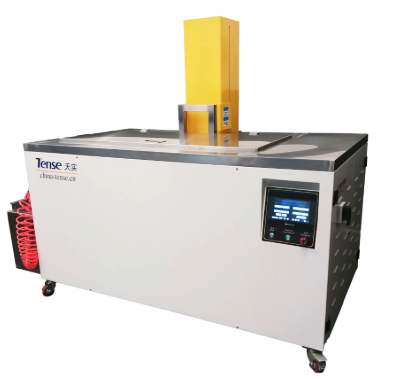
Lift Ultrasonic Cleaner TS-UD Series
Short Description:
The industry standard range of ultrasonic cleaning equipment ranges from 140 to 2300 liters capacity. They are designed for cleaning and descaling of all types of parts, components and accessories.
All equipment in this line can incorporate a lifting platform that facilitates loading and unloading of parts. They can also carry systems of filtration, separation of oils and water treatments, among others.
Identify the Soil Type
The first and most important factor is what you are trying to clean off:
- Oils and greases: Water-based alkaline cleaners work well for most oils and greases, especially when heated. Solvents may be needed for very heavy or aged contamination.
- Carbon deposits: Specialized water-based carbon-removing detergents with ultrasonic energy are usually the best choice.
- Rust and scale: Acidic water-based detergents or descaling solutions are typically used.
- Particulate contamination: Neutral or mildly alkaline water-based detergents with good surfactant packages work well.
- Waxes, resins, or adhesives: These can be tricky. Solvents may be needed, though some specialty water-based detergents can also work.
Consider the Material
The material of the parts being cleaned is another critical factor:
- Steel and cast iron: Most water-based detergents work well. Alkaline cleaners are usually the most effective. Use rust inhibitors if needed.
- Aluminum: Neutral or mildly alkaline detergents are recommended. Strong alkaline cleaners can etch or discolor aluminum.
- Brass and copper: Neutral or slightly alkaline cleaners are generally safe. Avoid strong acids or strong alkalis.
- Stainless steel: Very versatile—most detergents work well on stainless steel.
- Plastics and elastomers: Check compatibility carefully. Some solvents can attack certain plastics. Some water-based detergents may also cause swelling or discoloration.
Evaluate Environmental and Safety Requirements
Consider the regulatory environment in your area and your company’s safety and sustainability policies:
- Are there strict VOC emissions limits?
- Do you have hazardous waste disposal capabilities?
- What is your company’s policy on chemical use?
- Do you have proper ventilation and PPE for solvent handling?
For most operations today, water-based detergents are the preferred choice from an environmental and safety standpoint.
Factor in Total Cost
When comparing detergent options, look at the total cost of use, not just the purchase price:
- Cost per gallon of detergent
- How much detergent is used per batch
- How often the solution needs to be changed
- Disposal costs
- Energy costs (heating for water-based systems)
- Labor costs for handling and maintenance
- Equipment costs (ventilation, fire suppression, etc., for solvents)
In most cases, water-based detergents have a lower total cost of ownership than solvent-based systems.
Best Practices for Using Detergents with Ultrasonic Cleaners
Follow Concentration Recommendations
More is not always better. Using detergent at a higher concentration than recommended does not necessarily clean better and can actually reduce cavitation effectiveness. Follow the manufacturer’s recommendations for concentration.
Maintain Solution Temperature
Different detergents have different optimal temperature ranges. Make sure you are operating within the recommended range for your specific detergent. Using a detergent at the wrong temperature can reduce its effectiveness or cause it to break down prematurely.
Filter and Maintain the Solution
Regular filtration removes particulate contaminants and extends solution life. You should also monitor solution concentration and pH regularly and top up or replace the solution as needed. A well-maintained solution in a quality industrial ultrasonic cleaner will provide consistent, reliable cleaning performance.
Test Before Full-Scale Use
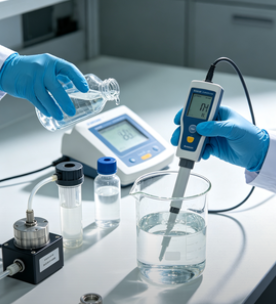
Whenever you are trying a new detergent or cleaning a new type of part, always test first. Clean a sample part and evaluate:
- Cleaning effectiveness
- Effect on the part material and finish
- Solution stability and foaming
- Rinse and drying characteristics
Testing on a small scale can save you from costly mistakes later.
Conclusion
Choosing the right cleaning solution is essential for getting the best performance from your ultrasonic cleaning machine. Water-based detergents offer environmental friendliness, worker safety, regulatory compliance, and cost-effectiveness, making them the preferred choice for most industrial applications today. Solvent-based detergents still have their place for certain specialized applications where water-based cleaners cannot do the job, but their use continues to decline due to environmental and safety concerns.
For most automotive, manufacturing, and maintenance applications, a high-quality water-based detergent matched to your specific soil type and part material will provide the best combination of cleaning performance, safety, and cost-effectiveness.
To learn more about ultrasonic cleaning solutions and find the right detergent for your application, the experts at Tense can help you select the optimal cleaning chemistry for your parts and process.
FAQ
Post time: Aug-31-2026