
It is known that compressor components often accumulate significant amounts of lubricating grease, oil sludge, machining debris, and other fine contaminants during processing and long-term operation. These contaminants—including oil residues and metal shavings—can increase friction, reduce fit accuracy, and in severe cases lead to operational abnormalities or failure, thereby shortening equipment lifespan. Traditional brushing or solvent immersion methods often fail to thoroughly remove stubborn deposits from the inner and outer rings as well as between the balls. In contrast, ultrasonic cleaning, as an efficient cleaning technique, can penetrate deep into the microscopic gaps of workpieces to achieve complete purification. This method rapidly, reliably, and gently removes minute contaminants such as particles, metal shavings, and lipid films, making it the ideal solution for cleaning bearings and precision shafts.
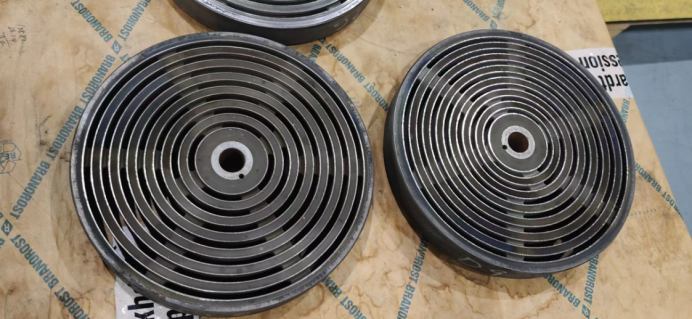
(Before Cleaning)
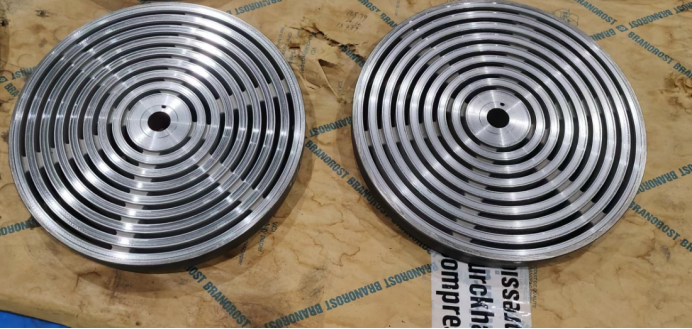
(After Cleaning)
The TENSE ultrasonic cleaner employs ultrasonic cleaning as the core process for cleaning precision components in transmissions, specifically targeting parts with high accuracy, complex structures, and numerous micro-pores or gaps such as valve bodies, solenoid valves, small gears, bearings, pistons, and friction plates. The working principle utilizes the cavitation effect generated by ultrasonic waves in the cleaning medium, creating countless microscopic bubbles that instantly rupture to release intense micro-impact energy. This energy penetrates hard-to-reach areas like micro-pores, gaps, and blind holes, effectively breaking down and removing stubborn contaminants including micro-debris, adhesive residues, and carbon deposits. In practical applications, parameters should be adjusted according to component materials: aluminum and plastic precision parts require low-frequency, low-power modes to avoid surface damage; steel wear-resistant components demand high-frequency, high-power modes to enhance cleaning efficacy. When combined with specialized neutral eco-friendly cleaning solutions and precise control of temperature and duration, this method thoroughly eliminates microscopic impurities in concealed areas while preserving the original precision and surface finish of components. Post-ultrasonic cleaning, components exhibit uniform surface cleanliness, unobstructed micro-pore oil passages, and cleanliness levels fully compliant with requirements for precision reassembly processes.
- Deep cleaning: Ultrasonic waves can penetrate complex structures, effectively cleaning hard-to-reach areas such as the gaps between the inner and outer rings of bearings and the balls.
- High-efficiency and non-destructive: It effectively removes contaminants without causing mechanical wear on the bearing surface, ensuring no impact on part accuracy.
- Save time: The automated cleaning process enables batch processing, significantly reducing labor costs and cleaning time.
- Environmental protection and energy efficiency: Water-based cleaning agents can be selected to avoid excessive use of organic solvents; this reduces chemical consumption and complies with environmental standards.
- Wide applicability: Suitable for bearings and components made from various metal materials including steel, aluminum alloy, stainless steel, and copper.
Typical cleaning process parameters
Depending on the type of bearing and degree of contamination, we typically employ a 28 kHz ultrasonic frequency to enhance cleaning efficacy. The power density (ultrasonic power per unit area) can be adjusted within the range of 0.5–3 W/cm²; values between 0.5–1 W/cm² are generally sufficient for effective cleaning, while higher levels (2–3 W/cm²) may be required for heavily contaminated cases. For the cleaning solution, a weakly alkaline aqueous solution with 3%–5% concentration or a neutral cleaner is recommended, as its alkaline components facilitate oil degradation while remaining gentle on metal surfaces. Optimal cleaning temperatures range from 45°C to 60°C, as this range accelerates contaminant dissolution without damaging components. Cleaning duration is typically set at 5–15 minutes, adjustable according to contamination severity. After completion, rinse residual cleaning agents with pure water, dry thoroughly with hot air to prevent corrosion, then apply a rust inhibitor and re-lubricate the bearing to ensure proper long-term performance.
Advantage Comparison and Typical Cases
Experimental results demonstrate that the optimized ultrasonic cleaning process achieves significantly higher efficiency than traditional methods. Data show that the improved ultrasonic procedure can enhance cleaning efficiency by over 50%, reaching more than 60% in certain scenarios. For instance, during a precision valve core cleaning test, ing 800 W power, 60°C temperature, 5% cleaning solution, and 15 minutes of ultrasonic treatment yielded an oil removal rate of 99.2%, with cleaning efficiency six times greater than manual brushing. This indicates that ultrasonic cleaning not only substantially reduces processing time but also markedly improves both dirt removal effectiveness and cleanliness levels.
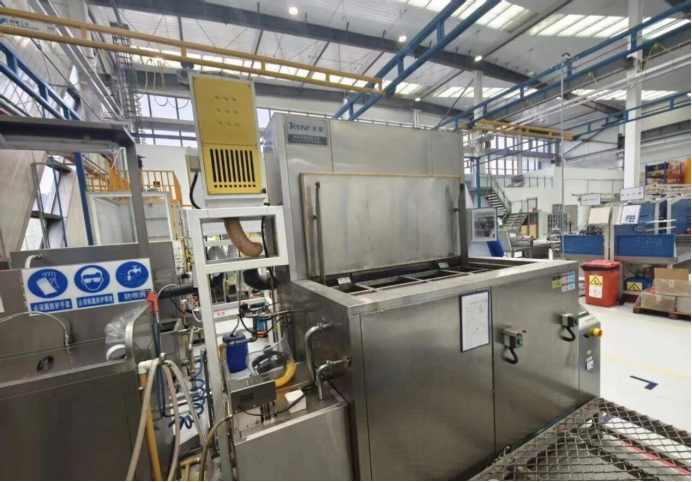
(The image shows a lifting-type ultrasonic cleaner at the ZF remanufacturing facility.)
Ultrasonic cleaning demonstrates excellent compatibility with common metal materials such as steel, aluminum alloys, and stainless steel. However, prolonged use of high power on ultra-soft or ultra-thin workpieces like pure aluminum should be avoided to prevent surface erosion. For applications requiring stringent rust prevention, an appropriate amount of rust remover or anti-rust additive can be added to the cleaning solution to remove rust deposits and form a protective film during cleaning. Upon completion of cleaning, we recommend immediate post-treatment of the bearings: rinsing with pure water, drying with hot air, applying anti-rust oil, and re-lubricating to ensure optimal performance and maximum service life.
Equipment Selection Recommendations
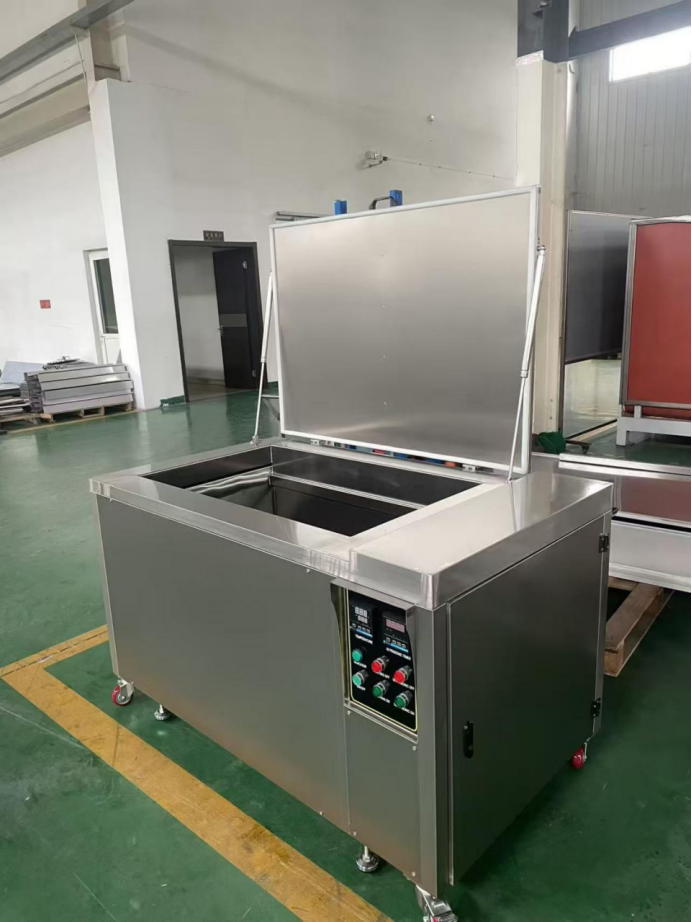
Selecting the appropriate ultrasonic cleaner is crucial for optimal performance. The tank capacity and ultrasonic power should be chosen based on bearing/axle dimensions and production batch size, while key parameters such as frequency (e.g., 28 kHz for deep cleaning; 40 kHz for thorough cleaning), power density, temperature control, degassing systems, and filtration systems must also be considered. Automation features like lifting baskets, circulation pumps, and filtration systems further enhance stability and cleanliness. Taking our TS series as an example, the TS-3600B model features a large 306 L tank, 40 transducers (28 kHz frequency, 1.8 kW power), and a 12 kW heater, specifically designed for large or batch processing applications to rapidly and uniformly clean heavily contaminated components such as bearings and shafts. To meet diverse requirements, we offer models with multi-frequency switching capabilities and various auxiliary configurations, ensuring customized, high-efficiency cleaning solutions.
| Model | TS-800 | TS-2000 | TS-3600B | TS-3600A | TS-4800B |
| Dimension(cm)L×W×H | 85 x 55 x 60 | 110×67×74 | 146×100×92 | 146 x 124 x 92 | 168×105×97 |
| Tank volume | 47ltr. | 120ltr. | 300ltr. | 300ltr. | 430ltr. |
| Tank size(cm) L×W×H | 45×35×30 | 75×40×40 | 100×55×56 | 100×55×56 | 120×60×60 |
| Basket size(cm)L×W×H | 37×30×21 | 67×36×32 | 92×51×42 | 92×51×42 | 117×56×49 |
| Heating power(kw) | 2.5 | 6.6 | 10 | 10 | 10 |
| Ultrasonicpower(kw) | 0.55 | 1.1 | 1.8 | 1.8 | 3.5 |
| Oil skimmer | NO | NO | NO | YES/15W | NO |
| Model | TS-4800A | TSD-6000B | TSD-6000A | TSD-7000A | TSD-8000A |
| Dimension(cm)L×W×H | 168 x 122 x 97 | 188×127×110 | 188×144×110 | 246×180×146 | 260×195×160 |
| Tank volume | 430ltr. | 780ltr. | 780ltr. | 1100ltr. | 1600ltr. |
| Tank size(cm) L×W×H | 120×60×60 | 140×80×70 | 140×80×70 | 170×90×75 | 200×100×80 |
| Basket size(cm)L×W×H | 117×56×49 | 126×69×56 | 126×69×56 | 153×73×58 | 186×86×68 |
| Heating power(kw) | 10 | 22 | 22 | 22 | 30 |
| Ultrasonic power(kw) | 3.5 | 5.3 | 5.3 | 12 | 16 |
| Oil skimmer | YES/15W | NO | YES/15W | YES/15W | YES/15W |
Contact us https://www.china-tense.net/industrial-ultrasonic-cleaner-washer-product/ jointly create a cleaner future. Visit our official website or consult our technical team for more information on ultrasonic cleaning systems and process solutions. We are committed to providing your company with professional bearing and precision shaft cleaning solutions to enhance product reliability and production efficiency.
Post time: Jun-08-2026