
If you have spent any time researching ultrasonic cleaning machine systems, you have probably noticed that nearly all industrial models come with built-in heating elements. But have you ever wondered why? After all, the cleaning power of ultrasonics comes from cavitation—sound waves creating bubbles that implode and scrub surfaces clean. So where does heat fit in? Does heating the cleaning solution actually make the cleaning better, or is it just a marketing gimmick? In this article, we dive into the science behind heat and ultrasonic cleaning, explain how temperature affects cavitation and cleaning performance, and help you understand why almost every quality industrial ultrasonic cleaner includes a heating system.
Before we get into the details, let us answer the basic question: yes, heat does improve ultrasonic cleaning performance—up to a point. But the relationship between temperature and cleaning effectiveness is not linear. There is an optimal temperature range, and going beyond it can actually reduce cleaning power.
To understand why, we need to look at how heat affects three key factors:
Let us examine each of these in turn.
One of the most important effects of heat on the cleaning solution is that it lowers surface tension. Surface tension is the property of liquids that makes water beads form on a surface and causes capillary action in small spaces. It is also a key factor in cavitation.
Cavitation occurs when the pressure in the liquid drops low enough to form vapor bubbles. Lower surface tension makes it easier for bubbles to form because there is less “skin” on the liquid surface holding it together. This means that at higher temperatures, more cavitation bubbles form, and they form more easily.
But wait—if lower surface tension is better, why not just heat the solution as hot as possible? Because there is a catch: as temperature increases, the vapor pressure of the liquid also increases.
Vapor pressure is the pressure exerted by the vapor inside a cavitation bubble. As the temperature of the liquid rises, more liquid evaporates into the bubble, increasing the vapor pressure inside.
Why does this matter? Because the cleaning power of a cavitation bubble comes from its implosion. When a bubble collapses, the vapor inside compresses, creating a micro-jet of liquid and a burst of heat energy. But if the vapor pressure inside the bubble is too high, the bubble does not implode as violently. It collapses more gently, like a deflating balloon rather than an imploding sphere.
This is the key trade-off: heat makes it easier to form cavitation bubbles (good), but it also makes those bubbles less energetic when they implode (bad). The optimal temperature is where these two effects balance out to produce the maximum overall cleaning power.
Heat also reduces the viscosity (thickness) of the cleaning solution. Lower viscosity means the solution flows more easily, penetrates better into small gaps and crevices, and wets surfaces more completely.
For cleaning parts with complex geometries—blind holes, narrow passages, tight tolerances—better wetting and penetration mean the solution gets everywhere it needs to be, and the ultrasonic energy can clean every surface.
While cavitation provides the mechanical energy for cleaning, the detergent provides the chemical energy. Most cleaning chemicals work faster and more effectively at higher temperatures. This is due to basic chemistry: chemical reaction rates roughly double with every 10°C increase in temperature (this is a simplification of the Arrhenius equation, but it holds for many common cleaning reactions).
What this means in practice is that a detergent that might take an hour to dissolve grease at room temperature might do the same job in 15 minutes at 60°C.
So what is the optimal temperature for ultrasonic cleaning? For most water-based detergent systems, the sweet spot is between 50°C and 70°C (122°F to 158°F). Within this range:
Below 50°C, you lose a lot of the chemical benefit of the detergent, and cavitation is somewhat less abundant. Above 70°C, the vapor pressure effect starts to significantly reduce cavitation intensity, and you begin to see diminishing returns—or even a decline in cleaning performance.
If you look at the specifications of most industrial ultrasonic cleaner units, you will notice that their maximum temperature is usually around 80–90°C. This is not an arbitrary number.
Above about 80°C, several things happen:
For most applications, there is simply no benefit to going hotter than 80°C, and there are several downsides. That is why quality units are designed to operate efficiently within the optimal temperature range rather than pushing for higher maximum temperatures.
Why: This range provides the best balance of cavitation intensity and grease-dissolving power. Oils and greases are fully liquefied, and the detergent is highly active.
Why: Higher temperatures help soften carbon deposits and accelerate the chemical action of carbon-removing detergents. Since carbon is more resistant, the extra heat helps.
Why: For general oils, cutting fluids, and light contamination, moderate temperatures provide excellent cleaning without unnecessary energy consumption.
Why: Some materials—certain plastics, rubbers, or soft metals—may be sensitive to higher temperatures. Lower temperatures still provide good cleaning while protecting the parts.
Why: For precision applications where surface finish is critical, moderate temperatures provide effective cleaning without the risk of thermal effects on the part surface.
This is probably the most common misconception. As we have discussed, cleaning performance peaks at a certain temperature and then declines if you go hotter. Running your ultrasonic cleaner at the maximum temperature does not necessarily give you the best cleaning—it may actually give you worse cleaning while wasting energy.
Tense industrial cleaning equipment factory was established in 2005; our cleaning equipment has passed ISO9001 quality system certification, EU CE, ROHS certification. Our cleaning equipment is exported to many countries, and has a long-term cooperative relationship with well-known brands such as Bosch , Caterpillar; Komatsu and other enterprises.
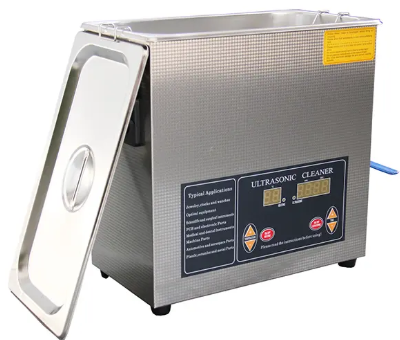
While it is true that ultrasonic cleaning works without heat, it works much better with heat. The combination of mechanical (cavitation) and thermal (heat) and chemical (detergent) action is what makes ultrasonic cleaning so effective. Removing any one of these three factors reduces performance.
Different detergents are formulated for different temperature ranges. Some are designed for cold cleaning, some for warm, some for hot. Using a detergent outside its recommended temperature range can reduce its effectiveness or even cause it to break down prematurely. Always follow the detergent manufacturer’s temperature recommendations.
Heat is not just an add-on feature for ultrasonic cleaners—it is an integral part of what makes them work so effectively. By lowering surface tension, improving wetting, accelerating chemical reactions, and softening soils, heat significantly enhances cleaning performance. But like most things in life, it is possible to have too much of a good thing. The optimal temperature for most applications is between 50°C and 70°C, where the benefits of heat balance out against the reduction in cavitation intensity.

When evaluating an industrial ultrasonic cleaner, make sure it has a reliable heating system with accurate temperature control. The ability to set and maintain the right temperature for your specific application is essential for getting the best cleaning results.
To explore industrial ultrasonic cleaners with precision temperature control and reliable heating systems, visit Tense’s product page to see the full range of TS Series cleaners.
Post time: Aug-28-2026