
Introduction
When you are in the market for an industrial ultrasonic cleaner, one of the first decisions you will face is whether to buy a single-tank system or a multi-stage cleaning line. Both approaches have their strengths, and choosing the right one depends on your specific application, production volume, cleanliness requirements, and budget. Making the wrong choice can mean either overpaying for capacity you do not need, or underinvesting and ending up with a system that cannot meet your quality standards. In this article, we compare single-tank and multi-stage ultrasonic cleaners, examine the pros and cons of each, and help you determine which type is the best fit for your operation.
Understanding the Two Approaches
What Is a Single-Tank Ultrasonic Cleaner?
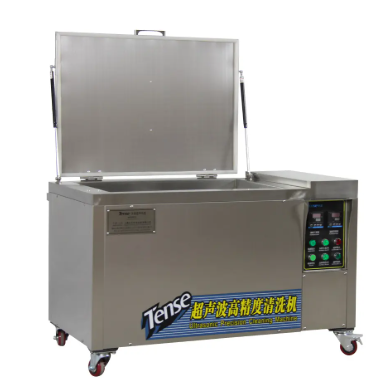
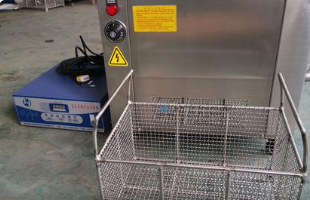
A single-tank ultrasonic cleaner, as the name suggests, consists of one cleaning tank with ultrasonic transducers, a heating system, and typically a basket for holding parts. The parts are loaded into the tank, cleaned for a set period, and then removed for rinsing and drying (if required).
Single-tank systems are the most common and most affordable type of ultrasonic cleaning machine. They are versatile, easy to operate, and suitable for a wide range of applications. Many small to medium-sized manufacturing and maintenance operations start with a single-tank system and add more capacity as needed.
What Is a Multi-Stage Ultrasonic Cleaner?
Ultrasonic cleaner TS series
Short Description:
TS series has been specifically designed for the cleaning and degreasing of all type of parts and components in Automotive industry. It achieves excellent cleaning results in many types of materials, especially in complex parts, where the ultrasounds have excellent results thanks to its high penetration capacity. Thus, the results while cleaning automobile engines are spectacular, even in those smaller and delicate parts.
Our Automotive series uses 28 kHz frequency with which the best results for the Automotive Sector are achieved.
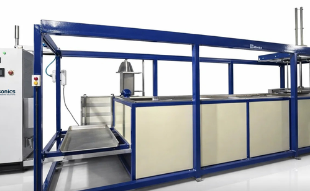
A multi-stage ultrasonic cleaning system consists of two or more tanks arranged in sequence, with parts moving from one tank to the next through the cleaning process. A typical three-stage system might include:
More complex systems can have additional stages like pre-wash, second rinse, rust inhibition, or multiple ultrasonic wash tanks with different detergents.
Multi-stage systems are designed for higher volume production and more demanding cleanliness requirements. They can be fully automated with conveyor systems or robotic part handling.
Comparing Performance and Capabilities
Cleaning Quality
When it comes to cleaning quality, the comparison is not as straightforward as you might think.
Single-tank cleaners can achieve excellent cleaning results for many applications. If your parts only need to be free of oil, grease, and general dirt, a single-tank ultrasonic cleaner with a good detergent may be all you need. The cavitation action is the same regardless of how many tanks you have.
However, single-tank systems have a limitation: the parts come out of the tank covered in dirty cleaning solution. When you remove the parts, the solution drips off, but some detergent and dissolved contaminants remain on the surface. If you do not have a separate rinse step, this residue dries on the part and can leave spots or a film.
Multi-stage systems address this by including dedicated rinse and dry stages. The rinse tank removes detergent residue, and the dryer ensures that parts come out completely clean and dry. For applications where spot-free, residue-free surfaces are required—such as parts going into plating, painting, or precision assembly—multi-stage systems generally produce better results.
That said, you can achieve similar results with a single-tank cleaner by adding a separate rinse tank and drying station. The difference is that it will not be as integrated or automated as a purpose-built multi-stage system.
Throughput and Productivity
This is where multi-stage systems have a clear advantage. In a multi-stage system, multiple batches of parts can be processed simultaneously—one batch in the wash tank, another in the rinse tank, another in the dryer. This creates a continuous flow that maximizes throughput.
For example, if each stage takes 10 minutes, a three-stage system can produce a finished batch every 10 minutes, even though each part spends 30 minutes total in the system. A single-tank system, by contrast, would take 30 minutes per batch (10 min wash + 10 min rinse + 10 min dry, done sequentially).
For high-volume operations, this throughput difference can be significant. A multi-stage system can often process 2–3 times as many parts per hour as a single-tank system with the same tank size.
Flexibility and Versatility
Single-tank systems win on flexibility. With one tank, you can:
- Change detergents easily for different types of parts
- Adjust cycle times on the fly for different soil levels
- Process parts of varying sizes and shapes
- Use the tank for different applications as needed
If you have a mix of parts with different cleaning requirements, a single-tank system gives you the flexibility to adapt. You can run a batch of greasy engine parts in the morning, switch to a different detergent, and clean precision components in the afternoon.
Multi-stage systems are less flexible. They are designed around a specific process flow, and changing that process can be difficult and time-consuming. If you need to run different types of parts with different cleaning requirements, a multi-stage system may not be the most efficient choice.
Cost Considerations
Upfront Investment
There is no question that multi-stage systems are more expensive upfront. A basic single-tank industrial ultrasonic cleaner might cost a few thousand dollars, while a multi-stage system with automation can cost tens of thousands or more.
The additional cost comes from:
- Multiple tanks and transducers
- Conveyor or automation systems
- Additional heating and filtration systems
- Control systems for coordinating the stages
- Larger footprint and more complex installation
For many small businesses and job shops, the upfront cost of a multi-stage system is simply not justifiable. A single-tank system can provide 80% of the benefit at a fraction of the cost.
Operating Costs
Operating costs are more nuanced. Multi-stage systems may actually have lower per-part operating costs at high volumes because:
- They use labor more efficiently (one operator can manage a fully automated system)
- They produce more consistent results, reducing rework
- They may use less detergent per part due to continuous filtration and separation
However, at low to medium volumes, the higher energy and maintenance costs of a multi-stage system usually outweigh the efficiency gains. Single-tank systems have lower energy consumption, simpler maintenance, and lower overall operating costs when throughput is not the primary concern.
Total Cost of Ownership
When evaluating cost, it is important to consider the total cost of ownership over the life of the equipment, not just the purchase price. Factors to consider include:
- Labor costs for operation and maintenance
- Energy and water consumption
- Chemical and detergent costs
- Maintenance and repair costs
- Downtime and reliability
- Expected lifespan of the equipment
For high-volume operations running multiple shifts per day, the higher throughput and lower per-part cost of a multi-stage system will usually justify the higher upfront investment. For lower-volume operations or job shops with varied work, a single-tank system will typically provide a better return.
How to Choose the Right System for You
Questions to Ask Yourself
- Do parts need to be completely free of detergent residue?
- Is a spot-free, dry finish required?
- Are there specific cleanliness standards you must meet?
If you need residue-free, spot-free, dry parts straight out of the machine, a multi-stage system with rinse and dry stages may be worth considering. If some residue is acceptable or you can rinse manually, a single-tank system may suffice.
- How many parts do you need to clean per day?
- Is the volume steady or variable?
- Do you need to process parts continuously or in batches?
If you have high, steady volume and need maximum throughput, a multi-stage system is probably the way to go. If volume is lower or variable, a single-tank system offers more flexibility at a lower cost.
- What can you afford to spend upfront?
- What is your expected return on investment timeline?
Be realistic about your budget and your expected ROI. It does not make sense to buy a system that takes 10 years to pay for itself when a less expensive system can meet your needs and pay for itself in one year.
- Do you have floor space for a multi-stage system?
- Can you accommodate the additional utility requirements (water, drainage, power)?
Multi-stage systems take up significantly more floor space than single-tank systems. Make sure you have the room before you commit.
- Do you clean the same parts every day, or do you have a mix of different parts?
- Do different parts require different cleaning parameters?
If you have a lot of variety in your work, a single-tank system’s flexibility will be a major advantage. If you process the same parts day in and day out, a dedicated multi-stage system makes more sense.
The Middle Ground: Modular Systems
It is worth noting that there is a middle ground between a basic single-tank cleaner and a fully automated multi-stage line. Many manufacturers offer modular systems that start with a single wash tank and can be expanded later with add-on rinse tanks, dryers, and automation.
This approach lets you start with what you need and grow into a larger system as your business grows. It is a good option for businesses that expect to increase volume over time but are not ready for a full multi-stage investment today.
The TS Series single-tank ultrasonic cleaning machine from Tense, for example, can be paired with separate rinse and drying stations to create a semi-automated multi-stage process without the full cost of a custom-engineered system.
Conclusion
Choosing between a single-tank and multi-stage ultrasonic cleaner comes down to matching the system to your specific needs. Single-tank systems are affordable, flexible, and easy to use, making them ideal for small to medium operations, job shops, and applications with varied work. Multi-stage systems offer higher throughput and better final cleanliness, making them the choice for high-volume production and applications with strict cleanliness requirements.
Before you buy, carefully evaluate your cleanliness requirements, production volume, budget, space, and work variety. Consider whether a modular approach might be the best fit, allowing you to start small and expand as needed.
To explore single-tank ultrasonic cleaning solutions and learn how they can be configured for your specific application, visit Tense’s product page to see the full TS Series lineup.
FAQ
Q: Can I add a rinse tank to my single-tank cleaner later?
A: Yes, in most cases you can add a separate rinse tank and even a drying station to create a semi-automated multi-stage process. This is a cost-effective way to upgrade as your needs grow.
Q: How much more does a multi-stage system cost?
A: A basic two or three-stage system typically costs 2–4 times as much as a single-tank system of similar capacity. Fully automated systems with conveyors can cost 5–10 times as much.
Q: Do I really need a dryer?
A: It depends on your application. If parts will air dry quickly and water spots are not a concern, you may not need a dryer. But for parts going into coating, plating, or packaging, a dryer is usually necessary to prevent water spots and ensure residue-free surfaces.
Q: Can a single-tank cleaner handle high-volume production?
A: Single-tank systems can handle significant volume if you have multiple units and stagger the cycles. However, for very high volume with continuous flow, a multi-stage system will be more efficient and require less labor.
Post time: Aug-24-2026