
Introduction
Automotive remanufacturing is a growing industry that restores used engines, transmissions, and other components to like-new condition. One of the most critical—and most challenging—steps in the remanufacturing process is cleaning. Every surface, every passage, every bore must be completely free of carbon, sludge, metal shavings, and old gasket material before inspection and reassembly. Traditional cleaning methods like hot tanking, bead blasting, and manual scraping are slow, labor-intensive, and often inconsistent. In recent years, more and more remanufacturers have turned to industrial ultrasonic cleaner technology as a faster, more thorough, and more cost-effective solution. In this complete guide, we explore how ultrasonic cleaning is transforming automotive remanufacturing.
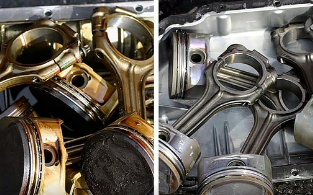
Why Cleaning Is Critical in Remanufacturing
The Quality Standard: Like-New Condition
The defining characteristic of remanufacturing—as opposed to rebuilding or repairing—is that the finished product must meet the same quality standards as a new part. This means every internal surface must be as clean as it was when the part left the factory.
This level of cleanliness is essential for several reasons:
- Proper inspection: You cannot accurately inspect for cracks, wear, or damage if the part is covered in carbon and sludge
- Assembly quality: Contamination left in the part can cause premature wear, sealing failures, or catastrophic damage once the engine is running
- Warranty protection: Remanufactured parts typically come with warranties, and cleaning-related failures are costly to repair
- Customer confidence: Customers expect remanufactured parts to look and perform like new
The Challenge of Used Engine Components
Used engine components present some of the toughest cleaning challenges in any industry:
- Carbon deposits on piston crowns, combustion chambers, and valve faces—hard, tenacious, and often years old
- Sludge and varnish in oil galleries and on internal surfaces—sticky, insoluble, and difficult to remove
- Metal shavings and debris from machining operations—tiny particles that can cause catastrophic damage if not removed
- Old gasket material on mating surfaces—often baked on and difficult to scrape off
- Rust and corrosion from water exposure and long-term storage
Removing all of this contamination, from every surface of every component, without damaging the part, is no small task.
Why Traditional Methods Fall Short
Hot Tanking: The Old Standard
For decades, hot tanking was the standard method for cleaning engine components. Parts are submerged in a tank of hot, caustic solution and soaked for hours. The hot chemical bath dissolves grease and softens carbon, which is then removed by manual scrubbing.
The problems with hot tanking:
- Slow: Typical soak times are 4–8 hours or more
- Labor-intensive: Parts still require extensive manual scrubbing after soaking
- Inconsistent: Results depend on the operator and the condition of the solution
- Limited penetration: The chemical bath cannot effectively clean blind holes and narrow passages
- Environmental concerns: Caustic solutions are hazardous to handle and expensive to dispose of
- Material limitations: Not safe for aluminum or other soft metals
Bead Blasting: Fast but Problematic
Bead blasting—shooting fine glass or plastic media at the part under pressure—removes carbon and dirt quickly. But it has significant drawbacks for remanufacturing:
- Surface damage: Blasting can alter surface roughness and dimensional tolerances
- Media entrapment: Glass beads can become trapped in holes and passages, causing problems later
- Dust and mess: Blasting creates a lot of dust that requires expensive containment and ventilation
- Limited reach: Cannot effectively clean internal passages
- Masking required: Critical surfaces must be carefully masked before blasting
Manual Cleaning: The Fallback
When all else fails, manual cleaning with scrapers, brushes, and solvent is the fallback. But it is:
- Extremely labor-intensive: Hours of tedious work per part
- Inconsistent: Quality varies from person to person and day to day
- Incomplete: Cannot reach internal passages and blind holes
- Hard on workers: Repetitive motion injuries, chemical exposure, and fatigue
How Ultrasonic Cleaning Solves Remanufacturing Challenges
Thorough Cleaning of Every Surface
The biggest advantage of ultrasonic cleaning machine technology for remanufacturing is its ability to clean every surface—internal and external—simultaneously and thoroughly.
Cavitation bubbles form throughout the entire volume of cleaning solution, reaching every surface the solution touches. This includes:
- Oil galleries and coolant passages in cylinder heads and blocks
- Ring grooves and oil return holes in pistons
- Hydraulic passages in valve bodies and transmission components
- Blind holes and cross-drilled passages in crankshafts and camshafts
- Internal surfaces of connecting rods and rocker arms
No other cleaning method can match this level of coverage. For remanufacturers, this means parts come out of the tank clean the first time, with minimal rework.
Gentle on Parts, Tough on Contamination
Remanufactured parts are often already worn or damaged—that is why they are being remanufactured. The last thing you want is a cleaning process that causes additional damage.
Ultrasonic cleaning is non-abrasive and non-damaging when properly configured. The cavitation bubbles are microscopic and do not erode or alter the base metal. This means:
- Critical dimensions and tolerances are preserved
- Bearing surfaces and sealing faces are not damaged
- Soft metals like aluminum are safely cleaned
- Polished surfaces retain their finish
This is particularly important for remanufacturing, where parts may already be close to wear limits. Any additional material removal from cleaning could push them over the edge.
Fast Cycle Times
Compared to hot tanking, which can take all day, ultrasonic cleaning is fast. Typical cycle times for engine components range from 15 to 45 minutes, depending on the level of contamination.
This speed has several benefits for remanufacturers:
- Higher throughput: More parts cleaned per day, per square foot of floor space
- Faster turnaround: Engines can be rebuilt and shipped sooner
- Better workflow: Cleaning becomes a fast, predictable step rather than a bottleneck
- Lower labor: One operator can manage multiple ultrasonic tanks simultaneously
Consistent, Repeatable Results
In remanufacturing, consistency is everything. Every engine you rebuild must meet the same quality standards. With manual cleaning methods, consistency is hard to achieve.
Ultrasonic cleaning delivers consistent, repeatable results with every cycle. The parameters—time, temperature, power—are set digitally and do not change from batch to batch. As long as the solution is properly maintained, every part comes out to the same standard.
Applications in Engine Remanufacturing
Cylinder Heads
Cylinder heads are one of the most common applications for ultrasonic cleaning in engine remanufacturing. They have complex internal passages—oil galleries, coolant jackets, valve guides—that are nearly impossible to clean thoroughly with traditional methods.
With an industrial ultrasonic cleaner, the entire head is submerged, and cavitation cleans every internal passage from end to end. Carbon on the combustion chamber side and valve faces is removed, and sludge in the oil galleries is completely flushed out.
Pistons and Connecting Rods
Pistons present a unique cleaning challenge because of the ring grooves, which pack tightly with carbon. Manual cleaning of ring grooves is tedious and time-consuming.
Ultrasonic cleaning penetrates into the ring grooves and removes carbon completely, often in 20–30 minutes. The piston crown, skirt, and pin bore are all cleaned at the same time. Connecting rods with their small end bushings and oil passages are also effectively cleaned.
Crankshafts and Camshafts
Crankshafts and camshafts have oil passages drilled through them that carry lubricating oil to the bearings. These passages can become restricted with sludge and varnish over time.
Ultrasonic cleaning flushes these passages completely, ensuring full oil flow in the rebuilt engine. The bearing journals are also cleaned without any risk of damage to the polished surface.
Transmission Components
Transmission valve bodies, with their intricate hydraulic passages and precision bores, are another excellent application for ultrasonic cleaning. The same is true for torque converters, clutch packs, and other transmission components.
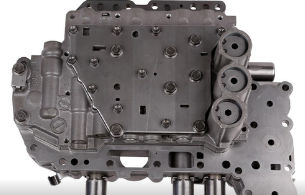
For transmission remanufacturers, ultrasonic cleaning has become an essential tool for ensuring proper hydraulic function and preventing valve body sticking and shift quality issues.
Optimizing Your Ultrasonic Process for Remanufacturing
Choosing the Right Size and Configuration
The first step is selecting a tank size that can accommodate your largest parts. For engine remanufacturing, this typically means a tank large enough for a cylinder head or engine block.
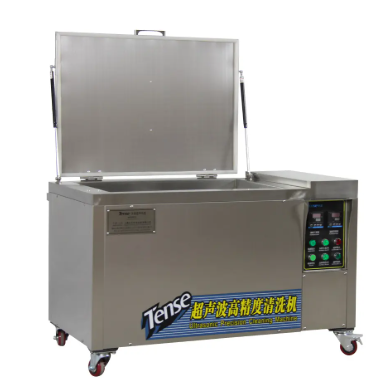
Single-tank systems like the TS Series from Tense are popular among remanufacturers because they offer a good balance of capacity, performance, and cost. Many shops start with a single large tank and add a rinse tank and dryer as their volume grows.
Frequency Selection
For most engine remanufacturing applications, a frequency of 28 kHz is the standard choice. This lower frequency provides the aggressive cavitation needed to remove heavy carbon and sludge deposits.
For shops that also clean aluminum parts or more delicate components, a 40 kHz system may be a better all-around choice. It is slightly less aggressive on heavy soils but more versatile for mixed workloads.
Detergent Selection
The right detergent is critical. For engine components with heavy carbon and oil, a heavy-duty alkaline cleaner is usually the best choice. Look for detergents specifically formulated for engine carbon removal—these often contain builders and sequestering agents that enhance carbon removal.
For aluminum parts, use a neutral or mildly alkaline detergent formulated for aluminum compatibility to prevent etching and discoloration.
Process Optimization
To get the best results from your ultrasonic cleaning system:
The Business Case for Ultrasonic Cleaning in Remanufacturing
Labor Savings
One of the biggest financial benefits is labor savings. What used to take hours of manual scraping and brushing now takes minutes of loading and unloading. A single operator can manage multiple ultrasonic tanks, achieving throughput that would require a team of manual cleaners.
For many remanufacturing shops, the labor savings alone pay for the equipment within the first year.
Improved Quality and Reduced Rework
Ultrasonic cleaning produces more consistent, more thorough results than manual methods. This means fewer parts fail quality inspection, less rework, and fewer warranty claims down the road.
In an industry where reputation and warranty performance are critical, better cleaning quality directly translates to better business outcomes.
Faster Turnaround
With faster cleaning cycles, the entire rebuild process moves faster. Engines spend less time waiting for parts to be cleaned, and more time being assembled and tested. This means you can turn around more engines in less time, increasing revenue without adding floor space or staff.
Conclusion
Automotive remanufacturing is an industry built on precision and quality. Every part must be restored to like-new condition, and that starts with thorough cleaning. Traditional cleaning methods—hot tanking, bead blasting, manual scrubbing—are slow, labor-intensive, inconsistent, and often unable to reach the internal passages that matter most.
Industrial ultrasonic cleaner technology addresses all of these shortcomings. It cleans every surface—internal and external—thoroughly and uniformly. It is gentle on parts, fast, consistent, and cost-effective. For engine rebuilders, transmission shops, and automotive remanufacturers of all sizes, ultrasonic cleaning has become an essential tool for delivering high-quality products efficiently.
If you are in the remanufacturing business and still relying on traditional cleaning methods, it may be time to see what ultrasonic technology can do for your operation. To explore solutions tailored to automotive remanufacturing, visit Tense to learn about the TS Series of industrial ultrasonic cleaners.
FAQ
Post time: Sep-02-2026