
Introduction
If you are shopping for an industrial ultrasonic cleaner, you have probably noticed that they come in different frequencies—28 kHz, 40 kHz, 80 kHz, and more. But what do these numbers mean, and why does frequency matter? Does a higher frequency clean better? Is a lower frequency more powerful? The truth is more nuanced than simply “higher is better” or “lower is stronger.” Choosing the right frequency is one of the most important decisions when selecting an ultrasonic cleaner, and getting it wrong can mean either damaging delicate parts or failing to clean tough soils. In this guide, we explain what ultrasonic frequency means, how it affects cleaning performance, and how to choose the right frequency for your application.
What Is Ultrasonic Frequency, Exactly?
The Basics of Sound Waves and Frequency
Before we dive into the comparison, let us make sure we are on the same page about what frequency means in the context of ultrasonic cleaning.
Frequency refers to the number of vibration cycles per second, measured in hertz (Hz). One kHz (kilohertz) equals 1,000 cycles per second. So a 28 kHz ultrasonic cleaner vibrates 28,000 times per second, while a 40 kHz unit vibrates 40,000 times per second.
These vibrations are created by transducers—devices that convert electrical energy into mechanical motion. The transducers are bonded to the cleaning tank and vibrate it at the ultrasonic frequency, which sends pressure waves through the cleaning solution inside.
How Frequency Affects Cavitation
The reason frequency matters is that it directly affects the size and intensity of the cavitation bubbles that do the actual cleaning. Here is the relationship:
Think of it like this: lower frequencies are like using a sledgehammer—powerful but potentially damaging. Higher frequencies are like using a sanding block—gentler but more uniform.
Both approaches have their place, and the right choice depends on what you are cleaning and what you are trying to remove.
The Three Main Frequency Ranges
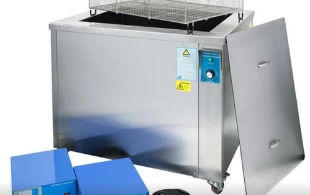
01 Low Frequency: 20–28 kHz
Characteristics:
- • Large cavitation bubbles with high implosion energy
- • Aggressive cleaning action
- • Fewer bubbles per unit volume
- • Deeper penetration into heavy soils
- • Can be heard as a noticeable “singing” or “whistling” sound
Best for:
- ✓ Heavy contamination like thick grease, carbon deposits, and rust
- ✓ Large, robust parts made of steel, cast iron, or other durable materials
- ✓ Engine components, transmission parts, and heavy machinery components
- ✓ Removing stubborn soils that resist gentler cleaning methods
Potential drawbacks:
- ⚠ Can be too aggressive for delicate parts or soft metals
- ⚠ May cause surface erosion on soft materials with prolonged exposure
- ⚠ The audible noise can be uncomfortable without sound dampening
For most automotive and heavy industrial applications, 28 kHz is the workhorse frequency. It provides the aggressive cleaning action needed to remove carbon, heavy grease, and other stubborn soils from durable metal parts.
02 Mid Frequency: 40 kHz
Characteristics:
- • Medium-sized cavitation bubbles with moderate energy
- • Good balance of cleaning power and surface safety
- • More numerous bubbles than low-frequency systems
- • Uniform cleaning across all surfaces
- • Less audible noise than lower frequencies
Best for:
- ✓ General-purpose parts cleaning
- ✓ Medium soils like oils, greases, and cutting fluids
- ✓ Mixed materials including aluminum, brass, and steel
- ✓ Precision parts that require thorough cleaning without surface damage
- ✓ Most manufacturing and maintenance applications
Why it is so popular:
Forty kHz is often called the “sweet spot” of ultrasonic cleaning because it works well for such a wide range of applications. It is powerful enough to remove most common industrial soils, yet gentle enough for most metal parts—including aluminum, brass, and machined surfaces. If you are not sure what frequency you need, 40 kHz is usually a safe starting point.
Many industrial ultrasonic cleaner models are available in 40 kHz for this very reason—it is the most versatile option for general industrial use.
03 High Frequency: 60–80 kHz and Above
Characteristics:
- • Very small cavitation bubbles with low implosion energy
- • Extremely gentle cleaning action
- • Very high bubble density
- • Uniform, fine-detail cleaning
- • Virtually silent operation
Best for:
- ✓ Delicate or precision parts
- ✓ Soft metals and easily damaged surfaces
- ✓ Highly polished or plated surfaces
- ✓ Electronics and semiconductor components
- ✓ Medical and dental instruments
- ✓ Applications where surface finish is critical
When to choose high frequency:
If you are cleaning parts with highly polished surfaces, soft materials, or delicate features, high-frequency ultrasonic cleaning is the way to go. The small, gentle bubbles clean thoroughly without causing any surface damage or erosion.
High-frequency systems are also preferred for applications where you need to remove very fine particles—sub-micron contaminants that lower frequencies might not effectively dislodge.
How to Choose the Right Frequency for Your Application
Step 1: Identify What You Are Cleaning
The first step is to consider the parts you will be cleaning:
- Durable, heavy parts (steel, cast iron, heavy machinery components): These can handle aggressive cleaning. A low-frequency (20–28 kHz) system will give you the fastest, most effective cleaning for heavy soils.
- General metal parts (mixed materials, average complexity): For most manufacturing and maintenance applications, 40 kHz is the best all-around choice. It cleans effectively without being too aggressive.
- Delicate or precision parts (aluminum, brass, polished surfaces, electronics): These require gentler cleaning. A high-frequency (60–80 kHz) system will clean thoroughly without damaging the surface.
Step 2: Consider What You Are Removing
The type of contamination also matters:
- Heavy, stubborn soils (carbon, heavy grease, burnt-on residue): These require the aggressive action of low-frequency cavitation to break through and lift the soil.
- Medium soils (oils, cutting fluids, general dirt): Mid-frequency systems handle these easily and are the most cost-effective choice.
- Fine contaminants (particulates, thin films, microscopic residues): High-frequency systems with their dense bubble field are often better at removing very fine contamination.
Step 3: Evaluate Surface Finish Requirements
How important is the surface finish of your parts?
- If surface finish does not matter much (e.g., rough castings, heavy machinery parts): Low frequency is fine
- If surface finish is moderately important (e.g., machined parts, standard components): Mid frequency is the safe choice
- If surface finish is critical (e.g., polished parts, plated components, precision optics): High frequency is necessary
Step 4: Think About Cycle Time
Generally, lower frequencies clean faster for heavy soils, while higher frequencies may require longer cycle times to achieve the same level of cleanliness. If speed is critical and your parts can handle it, a lower frequency will give you shorter cycles. If you have more time and need gentler cleaning, higher frequency is appropriate.
Common Frequency Myths Debunked
✖ Myth: Higher Frequency Cleans Better
This is probably the most common misconception. Higher frequency does not mean “better” cleaning—it means different cleaning. Higher frequencies produce gentler, more uniform cleaning with smaller bubbles. Lower frequencies produce more aggressive cleaning with larger, more energetic bubbles. Which is “better” depends entirely on what you are cleaning.
✖ Myth: 40 kHz Is Always the Best
While 40 kHz is the most versatile frequency, it is not always the optimal choice. For very heavy soils on durable parts, 28 kHz will clean faster and more effectively. For very delicate parts, 80 kHz will be safer. Forty kHz is a great default, but it is not always the best.
✖ Myth: Frequency Is the Only Factor That Matters
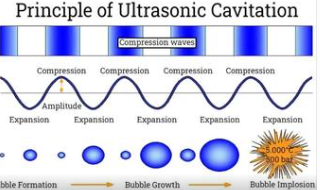
Frequency is important, but it is not the only factor. Power level, tank design, transducer placement, detergent choice, temperature, and part loading all play significant roles in cleaning performance. A well-designed 40 kHz system with good transducer placement and proper power will outperform a poorly designed 28 kHz system every time.
Real-World Examples
Automotive Engine Rebuilding
Application: Cleaning cylinder heads, engine blocks, pistons, and crankshafts with heavy carbon and grease.
Recommended frequency: 28 kHz
Reason: Heavy soils on durable parts require aggressive cleaning action.
General Manufacturing Parts Cleaning
Application: Removing cutting oils and swarf from machined steel and aluminum parts.
Recommended frequency: 40 kHz
Reason: Versatile frequency handles mixed materials and common soils effectively.
Precision Medical Device Manufacturing
Application: Cleaning surgical instruments and implant components with microscopic residues.
Recommended frequency: 80 kHz or higher
Reason: Delicate surfaces and strict cleanliness requirements demand gentle, uniform cleaning.
Electronics Manufacturing
Application: Cleaning flux residue from printed circuit boards.
Recommended frequency: 40–60 kHz
Reason: Need thorough cleaning without damaging delicate components or solder joints.
Conclusion
Choos
Digital Control Ultrasonic Cleaner
Short Description:
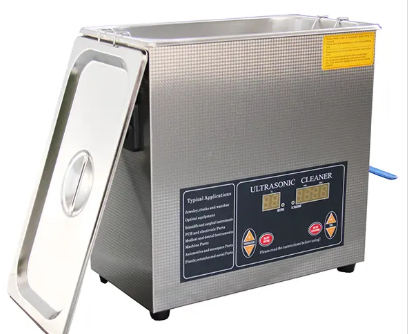
Tense industrial cleaning equipment factory was established in 2005; our cleaning equipment has passed ISO9001 quality system certification, EU CE, ROHS certification. Our cleaning equipment is exported to many countries, and has a long-term cooperative relationship with well-known brands such as Bosch , Caterpillar; Komatsu and other enterprises.
ing the right ultrasonic frequency is about matching the cleaning power to your specific parts and soils. Low frequencies (20–28 kHz) provide aggressive cleaning for heavy soils on durable parts. Mid frequencies (around 40 kHz) offer the best balance for general-purpose applications. High frequencies (60–80 kHz+) deliver gentle, uniform cleaning for delicate or precision parts.
Before you buy an industrial ultrasonic cleaner, take the time to evaluate your specific application: what you are cleaning, what you are cleaning off, and what surface finish you need. This will help you choose the frequency that gives you the best cleaning performance without risking damage to your parts.
If you are still unsure which frequency is right for your application, the experts at Tense can help you evaluate your parts and recommend the optimal frequency and system configuration.
FAQ
Q: Can I change the frequency on my ultrasonic cleaner?
A: Most standard ultrasonic cleaners operate at a fixed frequency. Some advanced models offer dual-frequency or sweep frequency capabilities, but these are less common and more expensive. It is better to choose the right frequency from the start.
Q: What if I need to clean both heavy and delicate parts?
A: If you have a mix of parts with different requirements, you have a few options: use a mid-range frequency like 40 kHz that works reasonably well for both, invest in two separate systems, or use a dual-frequency machine if available.
Q: Will 28 kHz damage aluminum parts?
A: It depends on the specific aluminum alloy, the condition of the surface, and the cycle time. For short cycles with mild detergent, 28 kHz is usually safe for most aluminum parts. But for prolonged cleaning or very soft aluminum alloys, 40 kHz is a safer choice.
Q: Is higher frequency more expensive?
A: Not necessarily. The cost of an ultrasonic cleaner depends more on size, power, and build quality than on frequency. A large 28 kHz industrial unit will cost more than a small 80 kHz benchtop unit.
Meta Title: What Frequency Should Your Ultrasonic Cleaner Be? 28kHz vs 40kHz vs 80kHz
Meta Description: Choosing the right ultrasonic cleaner frequency? Compare 28kHz, 40kHz, and 80kHz—learn which delivers the best cleaning for your parts and applications.
SEO Keywords: ultrasonic cleaning machine, industrial ultrasonic cleaner, ultrasonic cleaner frequency, 28kHz ultrasonic, 40kHz ultrasonic, 80kHz ultrasonic, cavitation frequency
Post time: Aug-26-2026