
Why Parts Rust After Cleaning (And How to Stop Flash Rust)
Introduction
Your ultrasonic cleaning machine has just finished a cycle. The parts come out looking better than they have in years—every trace of oil, carbon, and machining debris gone. Then, a few hours later, an orange-brown haze appears across the machined surfaces. By the next morning, precision steel components that were perfectly clean are dotted with rust. If this sounds familiar, you have experienced flash rust, and it is one of the most frustrating and costly problems in water-based parts cleaning. The good news is that flash rust is not a failure of ultrasonic technology. It is a predictable chemical process with well-understood causes and proven solutions. In this article, we explain exactly why parts rust after cleaning and give you a step-by-step protocol to stop it for good.
What Is Flash Rust?
Defining the Problem
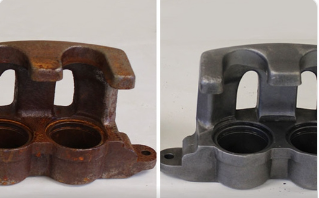
Flash rust is the rapid formation of corrosion on ferrous metal surfaces—steel, cast iron, and some stainless steels—shortly after they have been cleaned with water-based solutions. It can appear in as little as 30 minutes, or it may take up to a day to become visible. It typically shows up as:
- ✖ A light orange or brown stain across freshly cleaned surfaces
- ✖ Rust concentrated inside blind holes, crevices, and low points where water collects
- ✖ More severe corrosion on cast iron and carbon steel than on alloy or stainless parts
- ✖ Rust rings where wet parts sat in contact with a basket or tray
Why It Happens: The Corrosion Triangle
Rust is an electrochemical reaction that requires three ingredients: iron, oxygen, and water. When all three are present, corrosion begins immediately. Before cleaning, parts are protected by a layer of oil and grease that physically seals the metal surface away from oxygen and moisture. Ultrasonic cleaning strips that layer away completely, exposing chemically active bare metal.
This is the central paradox: the better your industrial ultrasonic cleaner works, the more thoroughly it removes the protective oil film, and the more vulnerable the part becomes to corrosion.
Why Water-Based Cleaning Creates the Risk
Tap Water Is the Hidden Culprit
Many shops that switch from solvent-based cleaning to water-based ultrasonic cleaning are surprised by rust because solvents dry quickly and leave no moisture behind. Water behaves very differently. It lingers on surfaces, settles into holes, and carries dissolved minerals and salts.
Aggressively attack bare steel and accelerate rusting.
Picks up oxygen from air, driving the corrosion reaction.
Leave spots and trap moisture against the surface.
Other Common Causes
- No rust inhibitor in the cleaning or rinse stage
- Parts left wet too long, especially in humid environments
- Water trapped in blind holes, threads, and overlapping joints
- Aluminum and steel parts cleaned together (Galvanic corrosion)
- Acidic or unsuitable detergent
- Contaminated, saturated solution
- Bare hands touching parts (transferring skin salts)
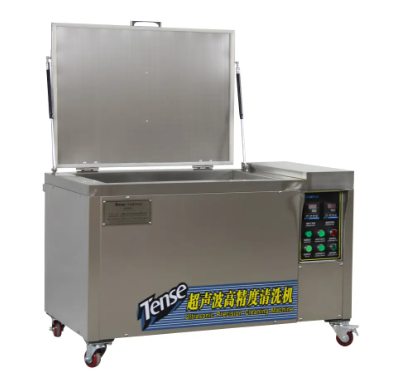
Ultrasonic cleaner TS series
Short Description:
TS series has been specifically designed for the cleaning and degreasing of all type of parts and components in Automotive industry. It achieves excellent cleaning results in many types of materials, especially in complex parts, where the ultrasounds have excellent results thanks to its high penetration capacity. Thus, the results while cleaning automobile engines are spectacular, even in those smaller and delicate parts. Our Automotive series uses 28 kHz frequency with which the best results for the Automotive Sector are achieved.
The Four Pillars of Flash Rust Prevention
1 Pillar 1: Control the Water
The single most effective upgrade you can make is to improve rinse water quality. Use deionized (DI) or reverse osmosis (RO) water for the final rinse to eliminate corrosion drivers and water spots. Run a two-stage rinse if cleanliness is critical.
2 Pillar 2: Use a Rust Inhibitor
Rust inhibitors are water-soluble additives that deposit a thin, temporary protective layer. Best practice is to use an inhibitor in the final rinse to ensure even coating into holes and crevices.
3 Pillar 3: Dry Parts Fast and Completely
The corrosion clock starts ticking the moment parts leave the rinse. Aim to dry within 10–15 minutes. Use compressed air blow-off for blind holes and hot-air drying ovens (70–100°C) for batch processing.
4 Pillar 4: Match Chemistry to the Metals
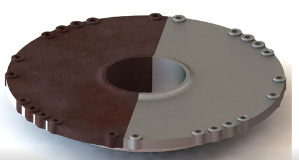
Avoid chemical attack by using alkaline detergents with inhibitors for steel/iron and neutral, aluminum-safe detergents for soft metals. Never clean aluminum and steel in the same bath if possible.
A Step-by-Step Rust-Proof Cleaning Protocol
- Pre-clean: Remove heavy oil/debris.
- Wash: Ultrasonic at 50–65°C with alkaline detergent.
- Rinse 1: Flowing tap water flush.
- Rinse 2: Final DI/RO water rinse with inhibitor.
- Blow off: Compressed air for every cavity.
- Dry: Immediate hot-air drying.
- Inspect & Protect: Verify dryness.
- Store: Use dry conditions and proper packaging.
Choosing Equipment That Supports Rust Prevention
A quality industrial ultrasonic cleaner is only one part of the answer. Look for:
- Available rinse and drying stages
- Heated tanks with accurate control
- Lifting or agitation mechanisms
- Filtration and oil skimming
- Stainless steel construction
- Automated cycle sequencing
For high-volume parts makers, Tense’s combined lifting-type systems built from the standard TS-UD modules (140 to 2,300 liters) integrate wash, rinse, and dry stages into a continuous flow.
Conclusion
Flash rust is a sign that the process is missing one or more protections. Build the four pillars into a written, repeatable protocol and your rust problems will disappear.
The engineering team at Tense can help you configure a wash–rinse–dry system matched to your needs.
FAQ
Q: How quickly can flash rust appear after cleaning?
A: Light rust can appear within 30–60 minutes in humid conditions. The safest rule is to dry ferrous parts immediately and never leave them wet overnight.
Q: Will a rust inhibitor interfere with painting or plating?
A: Some must be removed, others are compatible. Select the inhibitor based on your downstream process requirements.
Q: Do aluminum parts get flash rust?
A: Aluminum oxidizes or discolors rather than rusting. Use neutral or mildly alkaline aluminum-safe detergents.
Q: Is DI water really necessary, or is filtered tap water enough?
A: Filters don’t remove dissolved salts. DI or RO water is the standard for precision operations to prevent corrosion and spots.
Post time: Oct-14-2026