
Selecting the right industrial ultrasonic cleaner manufacturer directly impacts production uptime, cleaning consistency, and total cost of ownership. With dozens of suppliers on the market, distinguishing credible partners from low-cost resellers takes structured evaluation. This guide breaks down the decision criteria used by manufacturing engineers and procurement teams worldwide.
1. Verify In-House Engineering & Manufacturing Capability 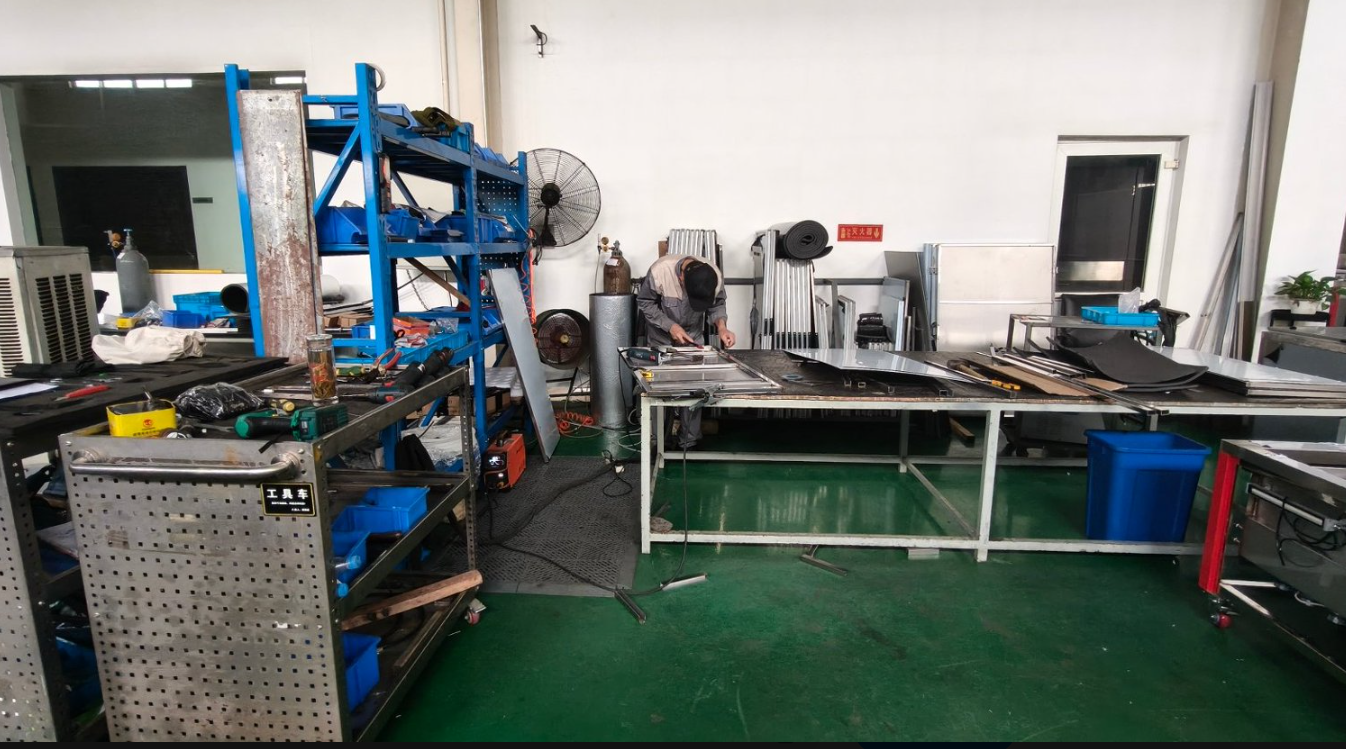
Not every “manufacturer” actually designs and builds its own equipment. Many suppliers assemble third-party tanks and generators under a branded label.
What to check:
- ✓Does the supplier own its own CNC machining and welding facilities?
- ✓Is the ultrasonic generator designed in-house, or sourced as an off-the-shelf module?
- ✓Can they provide detailed mechanical drawings and material specifications on request?
- ✓Do they hold patents or utility models for cleaning process technology?
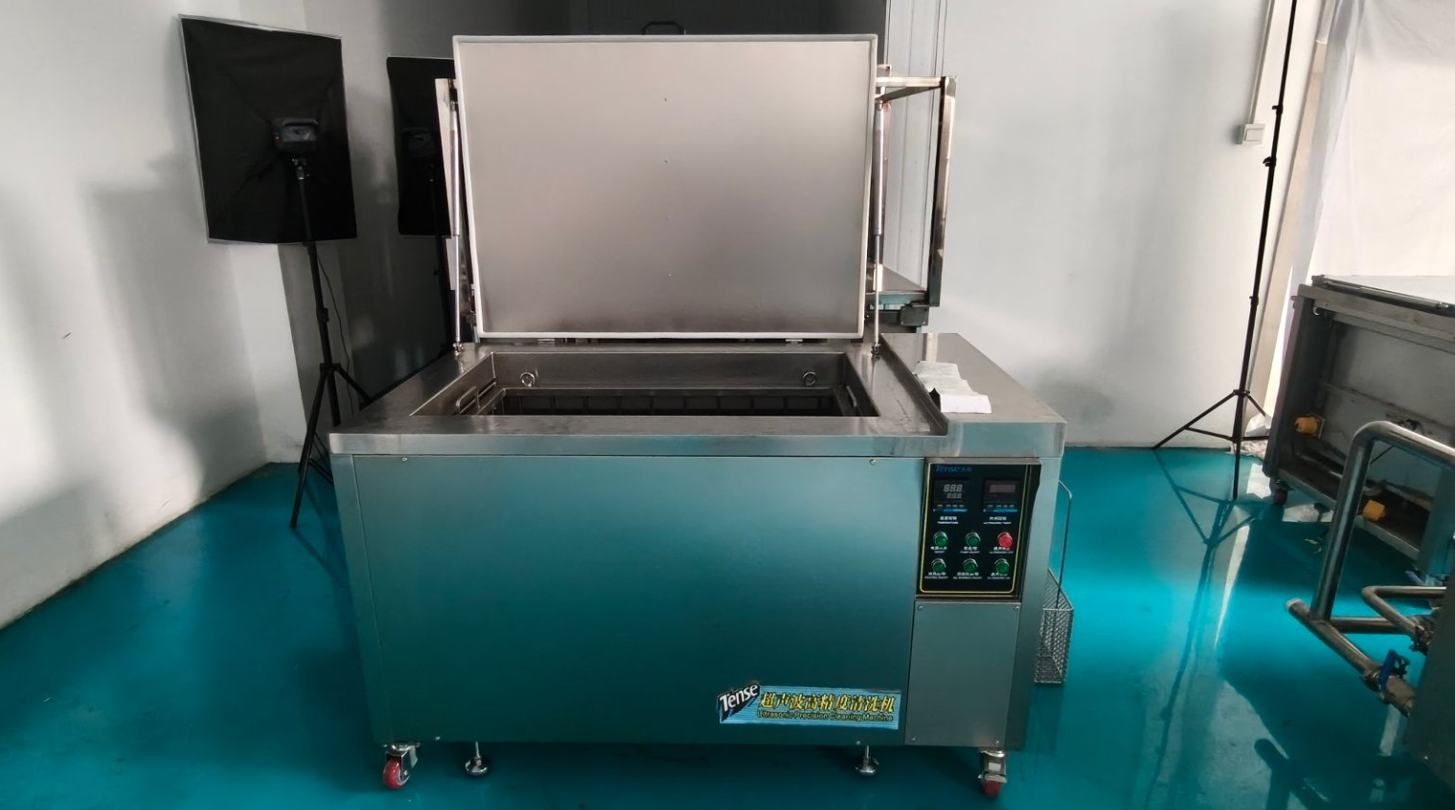
Tense has manufactured industrial cleaning systems in Shanghai since 2005, with in-house mechanical, electrical, and process engineering teams. Explore our TS series single tank Industrial ultrasonic cleaner built for production environments.
2. Evaluate Customization Depth 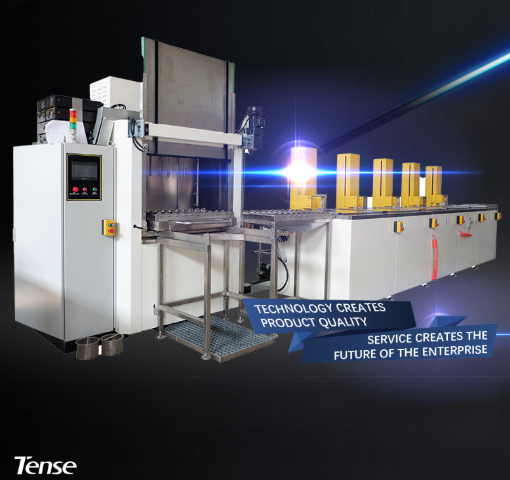
Combined Lifting Type Ultrasonic Cleaning Machine
The equipment is based on the company’s standard model TS-UD series to do the combination of functions to upgrade, so as to meet the streamlined production operations.
Off-the-shelf bench-top units rarely fit real production requirements. Industrial applications almost always need tailored tank dimensions, fixture designs, automation levels, and material compatibility.
Key customization points to discuss:
- ✓Tank size and geometry (single-stage vs. multi-stage lines)
- ✓Part loading method — manual, hoist, gantry, or fully automated
- ✓Frequency options — single, dual, or sweep frequency for mixed part types
- ✓Integrated rinsing, drying, and wastewater treatment stages
- ✓PLC / HMI control and data logging for quality traceability
A manufacturer that can only change tank dimensions is not a true custom solution provider. Look for partners who can adapt the entire process flow to your parts.
3. Assess Process Application Expertise
Equipment performance depends heavily on matching cleaning parameters to the application. A manufacturer with deep process knowledge will recommend the right frequency, chemistry, temperature, and cycle time — not just sell a standard tank.
Industry experience indicators:
- ✓Case studies or reference customers in your specific sector (automotive, aerospace, medical, etc.)
- ✓Ability to run sample part cleaning trials before purchase
- ✓In-house lab or test center with process development capability
- ✓Published technical content on cleaning challenges relevant to your parts
4. Check Build Quality & Material Standards
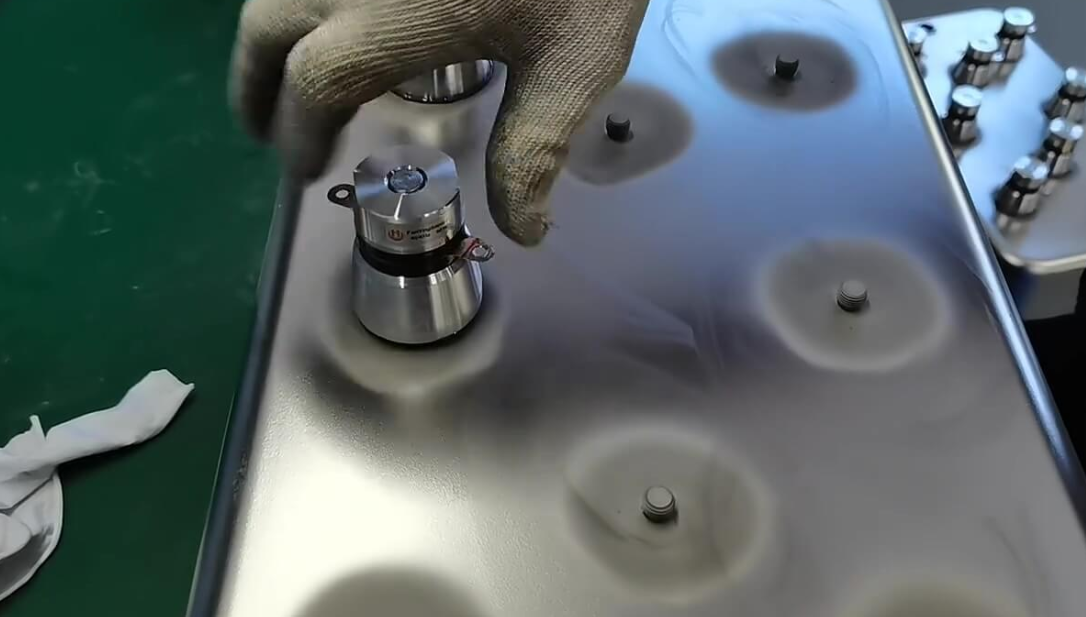
Industrial ultrasonic tanks operate under harsh conditions — heat, chemical exposure, and continuous cavitation. Build quality determines service life.
Critical quality points:
- ✓Stainless steel grade — 304 for general use, 316L for corrosive chemistries
- ✓Weld quality — full-penetration TIG welds, ground and polished interior
- ✓Transducer mounting method — bonded vs. welded (welded is more durable)
- ✓Generator cooling design and electrical component brand (Schneider, Omron, etc.)
- ✓CE, RoHS, and relevant safety certification
5. After-Sales Service & Spare Parts Availability
Industrial cleaning equipment runs 8–24 hours per day. Downtime costs far more than the machine itself.
Service questions to ask:
- ✓What is the standard warranty period, and what does it cover?
- ✓Are spare parts (transducers, generators, pumps) stocked locally or regionally?
- ✓What is the typical response time for on-site service?
- ✓Do they offer preventive maintenance contracts?
- ✓Is remote diagnostic support available via PLC connection?
6. Total Cost of Ownership, Not Just Purchase Price
The cheapest machine almost never costs the least over its lifecycle.
Factor in:
- ✓Energy consumption (kW per hour of operation)
- ✓Consumable costs (detergent, filter cartridges)
- ✓Labor required for operation and maintenance
- ✓Expected service life before major overhaul
- ✓Resale or trade-in value
7. References & Site Visits
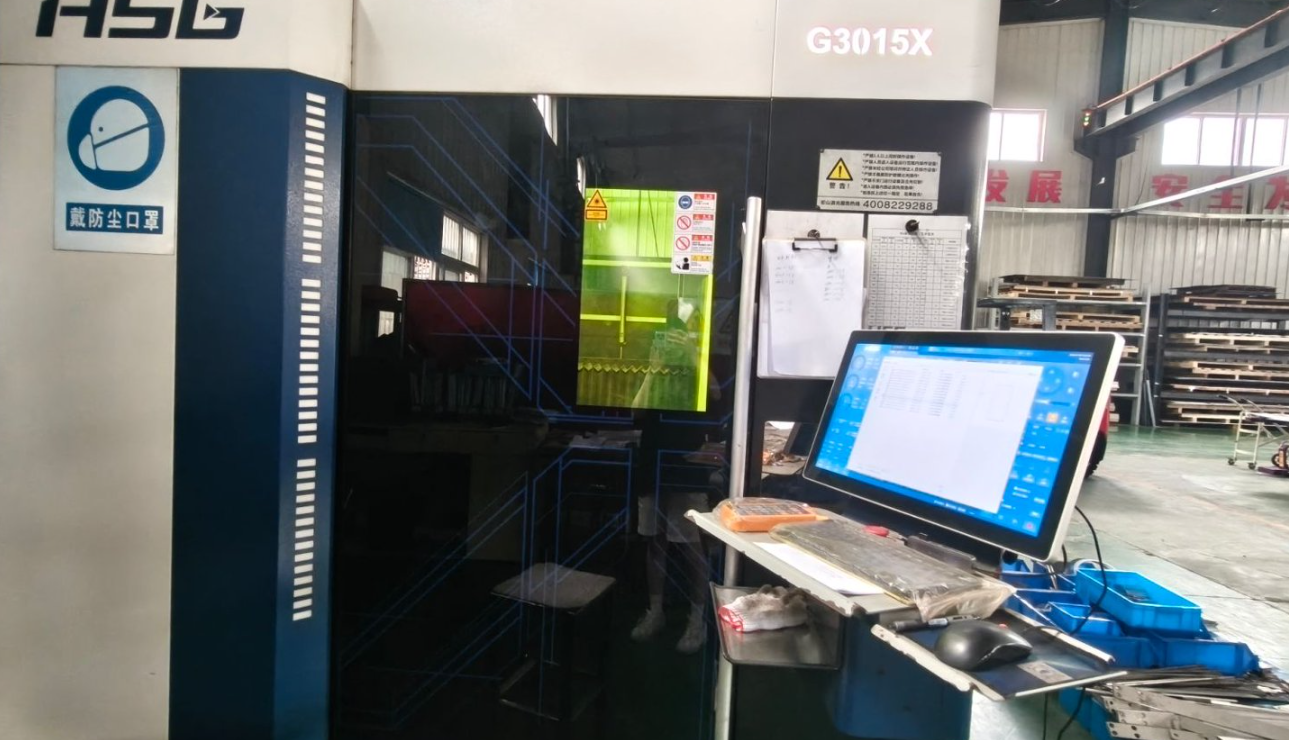
Nothing validates a supplier like seeing installed equipment running in a real factory. Whenever possible:
- ✓Request 2–3 reference sites in your industry
- ✓Ask about uptime rate and any major failures
- ✓Inquire about the supplier’s responsiveness to service calls
- ✓If feasible, arrange a factory visit to inspect manufacturing quality firsthand
Conclusion
Choosing an industrial ultrasonic cleaner manufacturer is a long-term partnership decision. Prioritize suppliers with proven in-house engineering, relevant industry experience, robust build quality, and responsive after-sales support — rather than selecting on price alone. A well-chosen system will deliver 10+ years of reliable service with consistent cleaning results.
For a no-obligation process evaluation and quotation, contact the engineering team at Tense Industrial Cleaning Systems.
Frequently Asked Questions
Q: What is the typical lifespan of an industrial ultrasonic cleaning system?
A: With proper maintenance, a well-built industrial ultrasonic tank lasts 10–15 years. Generators and transducers may require replacement or refurbishment after 8–10 years of continuous 2-shift operation.
Q: Can any ultrasonic cleaner be used for industrial production?
A: No. Bench-top and laboratory units are designed for intermittent use and light loads. Production-grade systems use heavier tank construction, industrial-grade transducers, and continuous-duty generators rated for 8–24 hour operation.
Q: How long does it take to build a custom industrial ultrasonic cleaner?
A: Standard single-tank units typically ship in 3–4 weeks. Fully automated multi-stage lines with custom fixturing and PLC integration require 8–10 weeks from order confirmation, depending on complexity.
Post time: Jul-13-2026